How Much Do Prototypes Cost In 2026? Pricing With Real Examples
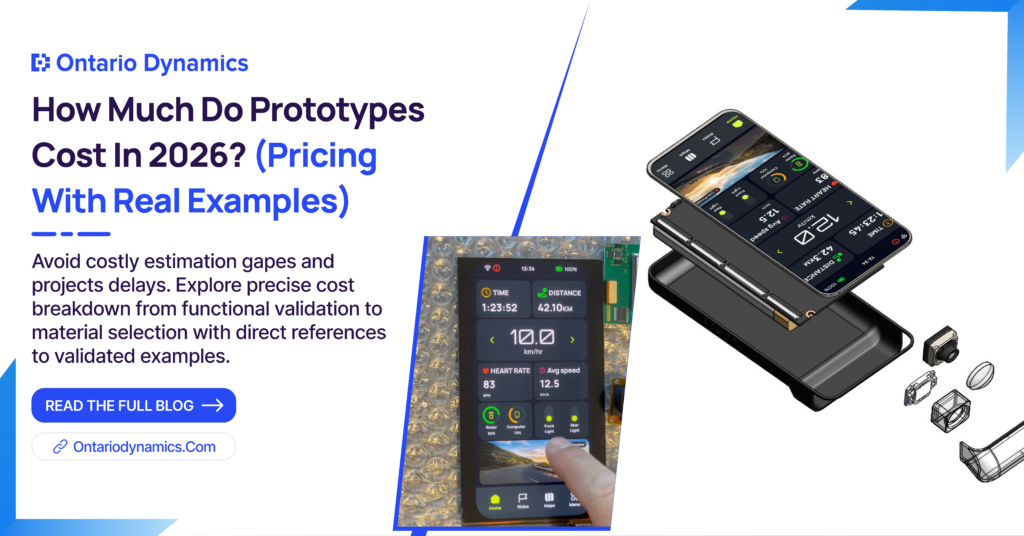
This blog explains prototype pricing in 2026 in a simple way. It covers what a prototype is, what drives prototype costs, and how to build a realistic prototype cost estimate before spending money.
Key Takeaways
- Prototype costs vary based on complexity, materials, quantity, and testing.
- A simple visual sample may cost a few hundred dollars.
- A functional hardware build can run into the thousands.
- Tooling and validation are often the biggest drivers of budget changes.
- Prototype automotive work is usually more expensive.
What Is A Prototype
Most physical product prototypes cost between $500 and $25,000, depending on complexity, material, quantity, testing needs, and development stage. A basic 3D-printed appearance model may cost $150 to $600, while a functional machined assembly can range from $1,500 to $8,000 or more. The cost of prototyping a product increases when the prototype must prove fit, strength, motion, heat resistance, or production readiness. That is why prototype cost estimation should start with the purpose of the build, not just the size of the part.
Why Prototypes Cost More Than Expected
Many buyers think a prototype quote is only the price of one part. It usually includes much more.
A prototype budget may include:
- Design file cleanup
- Machine setup
- Material
- Programming
- Special tooling
- Assembly
- Purchased parts
- Inspection
- Revisions
- Basic testing
That is why prototype cost estimation should never start with material price alone. A small aluminum part may look simple, but setup, programming, and inspection can still make a one-off part expensive. Recent 2026 machining guides note that small-batch prototype work carries a premium because setup and programming are spread over very few units.
The Main Cost Drivers
1. Complexity
Simple shapes cost less. Tight tolerances, hidden features, and multi-part assemblies cost more.
2. Material Choice
Plastic, aluminum, stainless steel, and specialty materials all cost differently. Harder materials often take more time to cut and finish. Several 2026 machining guides note that stainless steel and titanium raise tool wear and cycle time compared with aluminum.
3. Quantity
One part is expensive per piece. Ten parts often cost less per piece because the setup is shared among them. One 2026 machining guide says moving from a single prototype to a 100-piece run can reduce per-part cost by about 60 percent.
4. Process
3D printing is often cheaper for visual checks. CNC machining is common for stronger, more precise parts. Tooling methods can be economical later, but the tool adds a major upfront cost. Prototype injection molds in 2026 are often quoted at $3,000 to $8,000 for simple aluminum tools, while soft-steel bridge molds can run $8,000 to $20,000.
5. Testing
If the prototype must survive load, vibration, heat, or repeated use, the budget goes up. One recent manufacturing article notes that early performance testing helps catch failures before manufacturing and reduces rework and delays.
Real Prototype Pricing Examples In 2026
Small prototype automotive metal part $2,000 to $15,000 Stronger materials, tighter fit, validation
These ranges match 2026 sources, showing that physical hardware work can range from modest four-figure builds to much larger budgets, while a single automotive correction found during prototyping may cost $2,000 to $15,000, rather than far more after tooling is cut.
Why Prototype Automotive Work Costs More
Prototype automotive work usually costs more because the part often has less room for error. Fit, heat, vibration, repeat use, and safety all matter. Even a small bracket, housing, or mount may require stronger materials and more thorough testing than a basic consumer sample.
Automotive programs also face higher timing pressure. If a flaw is found after production tooling is built, the correction can become very expensive. One recent industry article notes that late changes after tooling can cost about $15,000 to $150,000 before delay costs are added.
Hidden Costs That Change The Budget
These items often surprise buyers:
- Shipping for rush parts
- Imported components
- Custom fasteners
- Fixture builds
- Finish work
- Repeat revisions
- Test failures
- Compliance needs
A cheap initial quote can become expensive if these items are added later. That is why good prototype cost estimation includes both build cost and follow-up cost.
How To Reduce Costs Without Cutting Corners
You do not always save money by making the part worse. Often, you save money by making the first build smarter.
Helpful ways to control Prototype Cost include:
- Reduce custom features
- Use standard holes, threads, and hardware
- Avoid tight tolerances unless needed
- Separate appearance testing from functional testing
- Order a small batch instead of repeating one-off builds
- Test early, before committing to tooling
Machining guides in 2026 note that standard hardware and standard hole sizes can reduce setup and tooling charges.
Build The Budget Before The Mistake
A realistic prototype budget is not just a price for one sample. It is a plan that connects the prototype to the decision you need to make. In 2026, a basic visual model may cost a few hundred dollars, while a working assembly, a low-volume mold, or a prototype automotive part can quickly move into the thousands.
We at Ontario Dynamics believe that the best prototype budget starts with scope. Teams should know what the prototype must prove, what can wait for a later version, and what kind of testing is needed before spending heavily. This helps avoid overbuilding too early or choosing a process that does not match the product’s real use.
Ontario Dynamics helps product teams and manufacturers look at prototype cost in a practical way. The focus is on function, materials, testing needs, production readiness, and the risks that could become expensive later. With a clearer plan before the first part is made, teams can control costs while still building a prototype that provides meaningful results.
If you’re looking for product prototype services, Ontario Dynamics provides expert support throughout the prototyping process, from design review and material selection to functional testing and prototype manufacturing, helping you validate your product with confidence.
Ready to Build Your Product?
Let’s turn your idea into a production-ready product engineered for success.
FAQs
A prototype is an early sample used to test shape, fit, function, or performance before full production starts.
Simple visual models may start at $150 to $600, while functional machined or assembled prototypes often run from about $1,000 to the low five figures, depending on scope.
Because material is only one part of the price. Setup, programming, tooling, purchased parts, inspection, and revisions all affect the total.
Material demands, fit requirements, testing needs, and tighter performance expectations usually make automotive prototype work cost more.
Not always. Visual checks are often cheaper, but machined parts may be a better value when strength, tolerance, or real-world testing matters.
Keep the first build focused, use standard features, test early, and avoid paying for production-level detail before it is needed.