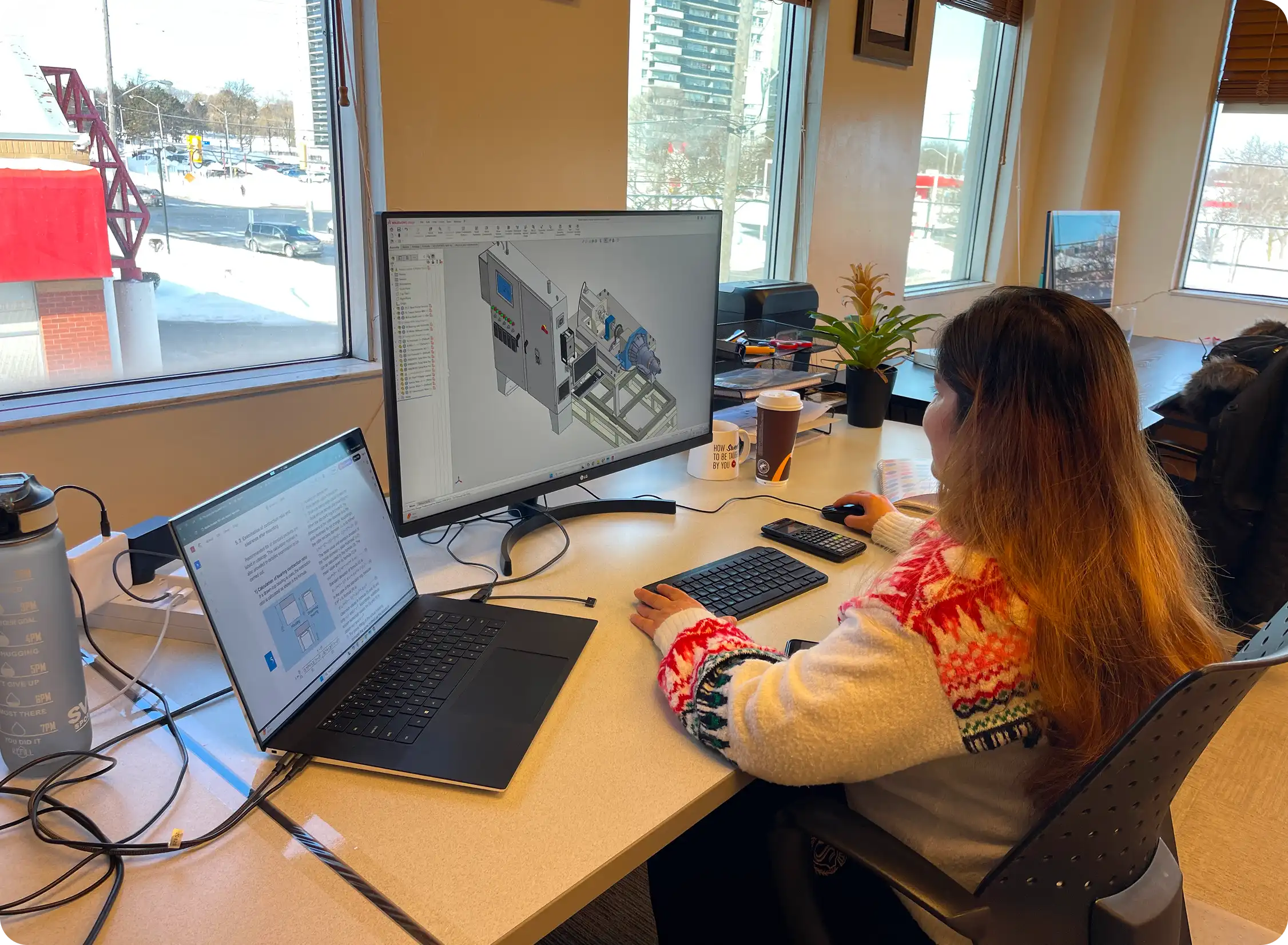
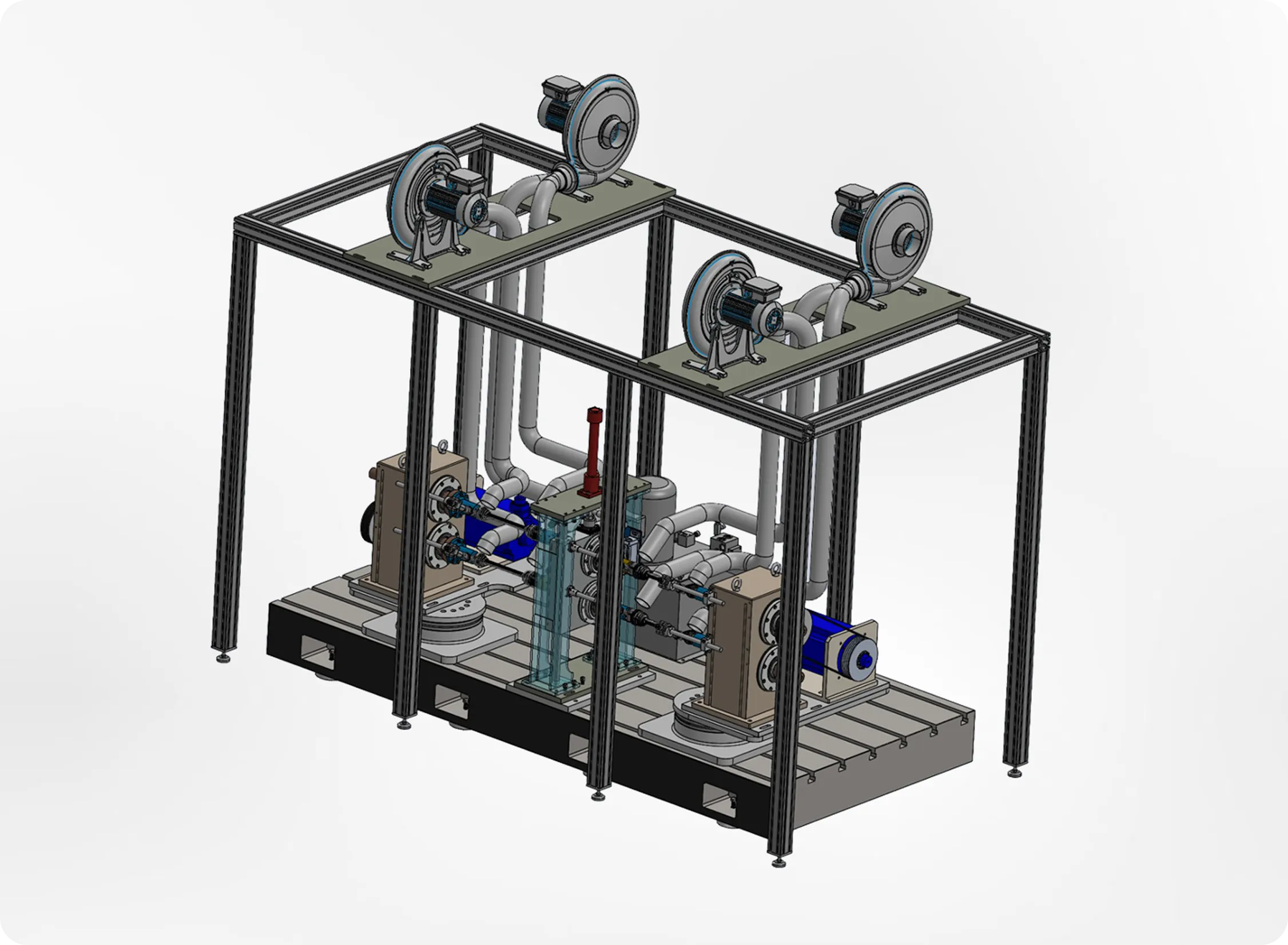
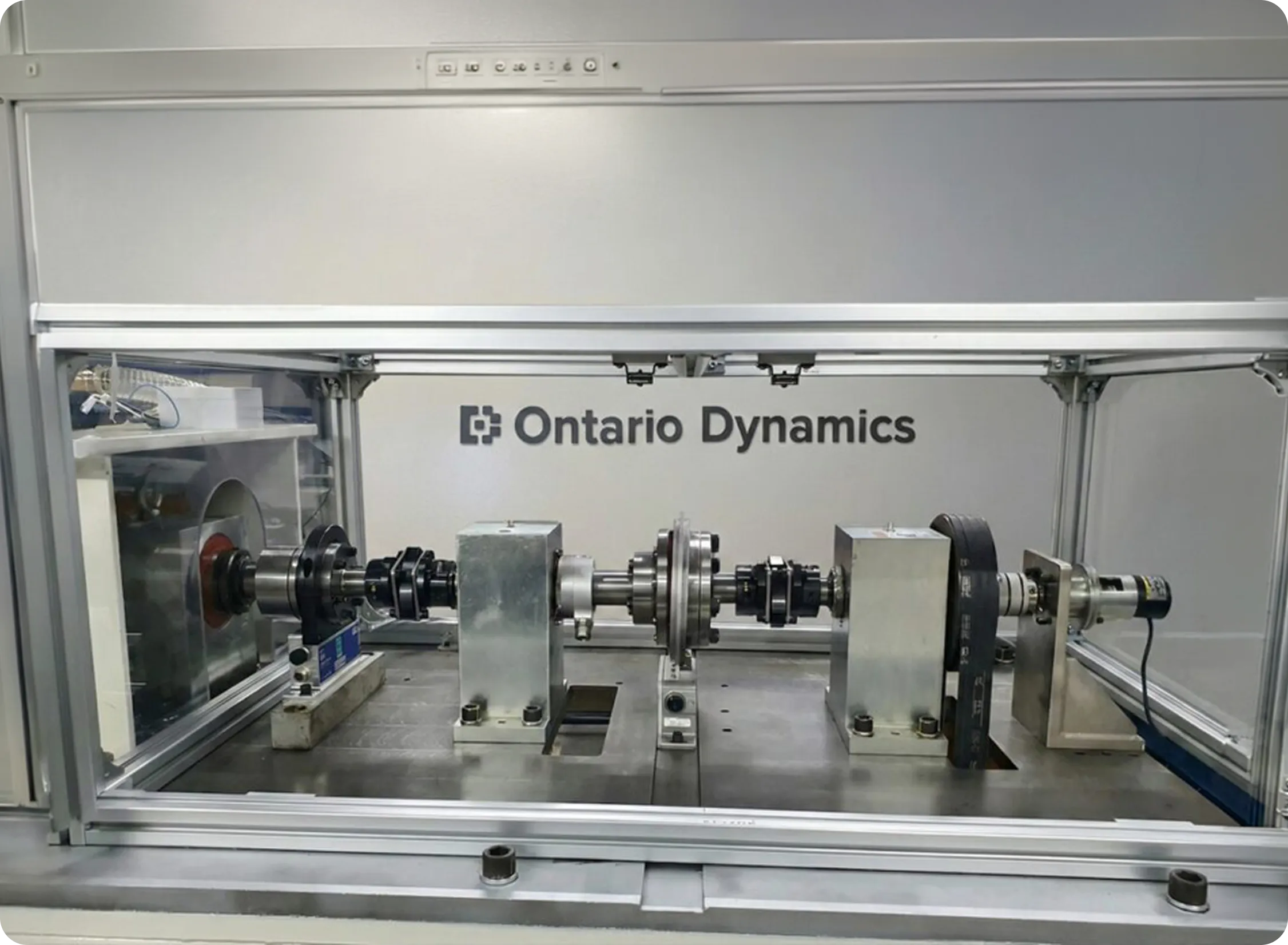
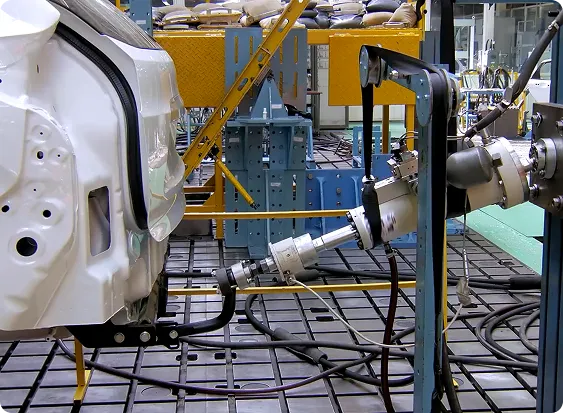
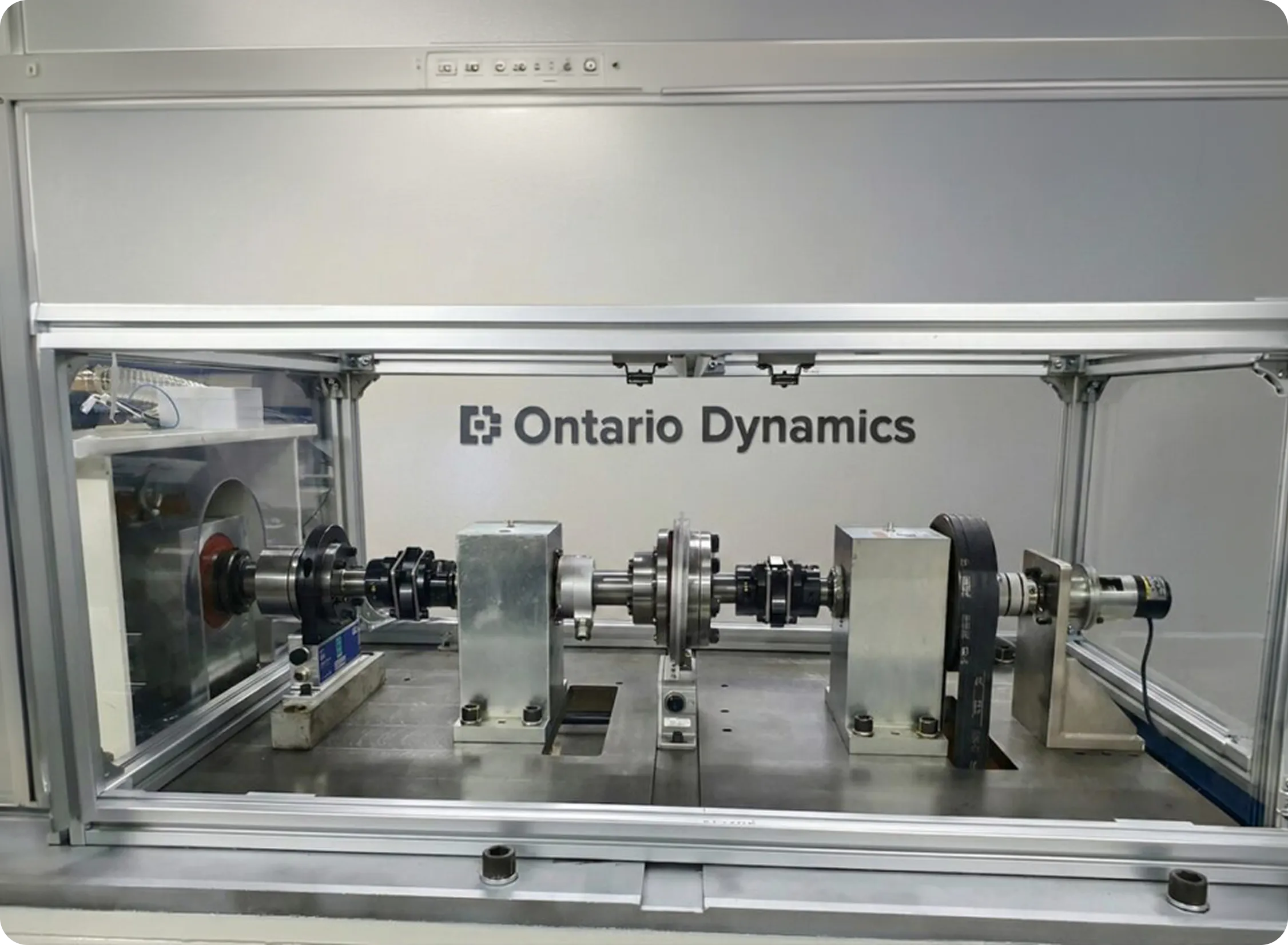
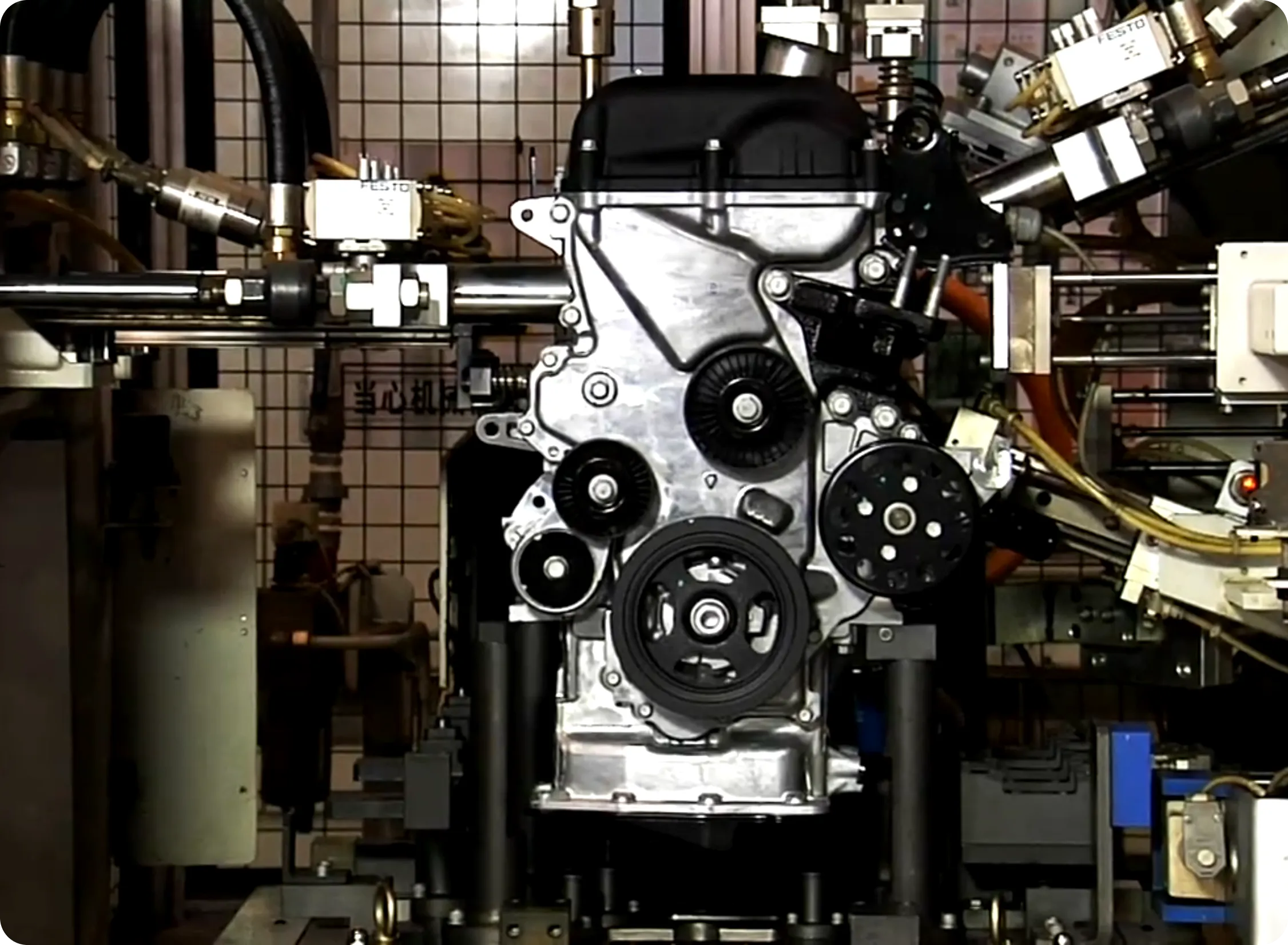
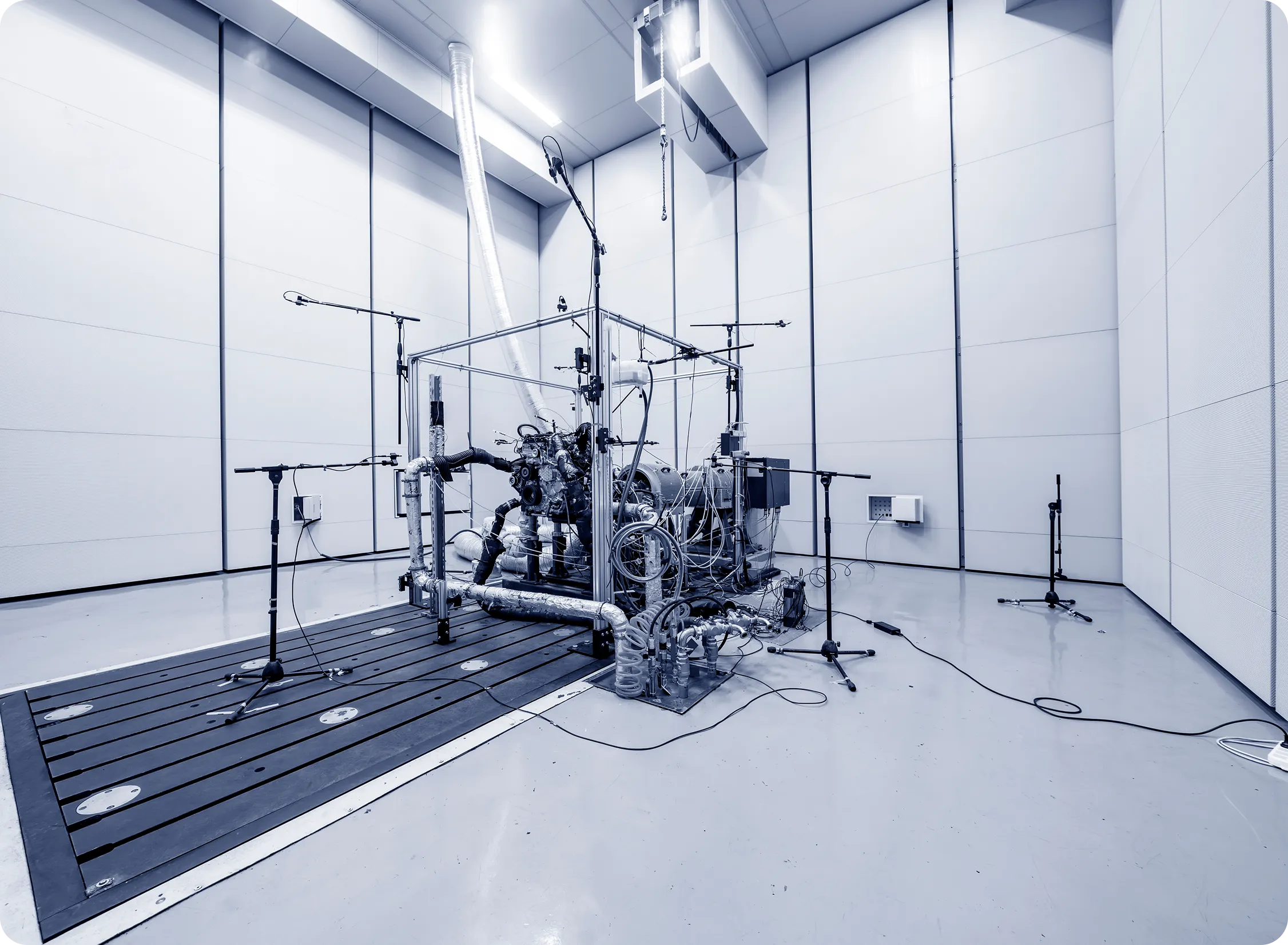
We specialize in the design and development of custom testing and validation equipment for a wide range of applications – including durability life-cycle testing, fatigue testing, noise/vibration/harshness (NVH) analysis, functional performance validation, and comprehensive data acquisition.
Our team serves automotive and manufacturing clients across North America, delivering turnkey test rigs tailored to your product’s requirements. We not only build these machines; we also consult on test specifications from the ground up. If you’re unsure what equipment you need to test your product, we will draft a complete specification and recommend the ideal solution.
Whether you are a startup with a new component or an established OEM, we provide the expertise to design the right test bench for you. In short, we bridge the gap from your testing needs to a fully realized machine, so you can prove out your product’s durability, safety, and performance with confidence.
Cyclic loading of automotive seat frames and cushions to ensure they withstand repeated use without structural failure.
Repeatedly compresses and extends suspension dampers to validate component fatigue resistance over millions of cycles.
Multi-axis loading of vehicle chassis or frame sections to identify any cracks or weakness under combined cyclic stresses.
Evaluates welded or bonded automotive structures under fluctuating loads to validate joint integrity.
Shakes and compresses rubber bushings or engine mounts to test their durability and damping performance over time.
A customizable test stand that can apply combined bending, torsion, and tensile loads on various mechanical components for comprehensive fatigue life assessment.
Subjects suspension springs to continuous compression-extension cycles to simulate long-term road usage.
Applies alternating torsional loads to shafts or axles to ensure they survive high-cycle twisting forces.
Opens and closes vehicle doors through tens of thousands of cycles to guarantee hinges, latches, and seals do not wear out or fail.
Compresses and releases engine valve springs at high frequency to ensure they retain tension and do not crack over millions of cycles.
Multi-axis test stand that reproduces road conditions on suspension assemblies to assess long-term durability.
Vibrates and shakes vehicle dashboard assemblies to expose any rattles, squeaks, or component loosening.
Runs engines continuously for hundreds of hours to validate reliable operation over their service life.
Operates hydraulic systems under load through extended cycles to confirm reliability.
Automatically slams vehicle doors thousands of times to ensure mechanisms withstand real-life usage.
Delivers repeated shock loads to simulate years of vibration and bumps.
Cycles brake components through thousands of braking events to assess wear rates and longevity.
Cycles automotive transmissions through repeated gear shifts and torque loads to ensure endurance.
Repeatedly extends and retracts actuators to verify they meet required cycle counts.
Subjects components to cycles of extreme temperatures combined with mechanical loading.
Applies continuous vibration, heat, and humidity to guarantee electronics survive harsh environments.
Rotates tires against a road drum to replicate long-term driving stress.
Evaluates transmissions for noise, vibration, and harshness under various speeds and loads.
End-of-line test system where engines are motored to check assembly quality and compression.
Measures engine performance under load, capturing horsepower, torque curve, and fuel efficiency.
Tests brake systems by measuring stopping torque, heat dissipation, and fade characteristics.
Automatically slams vehicle doors thousands of times to ensure mechanisms withstand real-life usage.
Delivers repeated shock loads to simulate years of vibration and bumps.
Evaluates HVAC units for airflow, cooling/heating capacity, and noise level.
Full vehicle test machine that measures overall vehicle performance with wheels on rollers.
Assesses electric motors and hybrid drivetrains for output torque, speed, and efficiency.
Subjects components to cycles of extreme temperatures combined with mechanical loading.
Simulates steering loads to measure assist torque and response time.
Specialized NVH rig that vibrates interior components to detect unwanted noises.
Gearboxes run under load to measure gear whine, rattle, and vibration at various speeds using sensitive microphones and accelerometers.
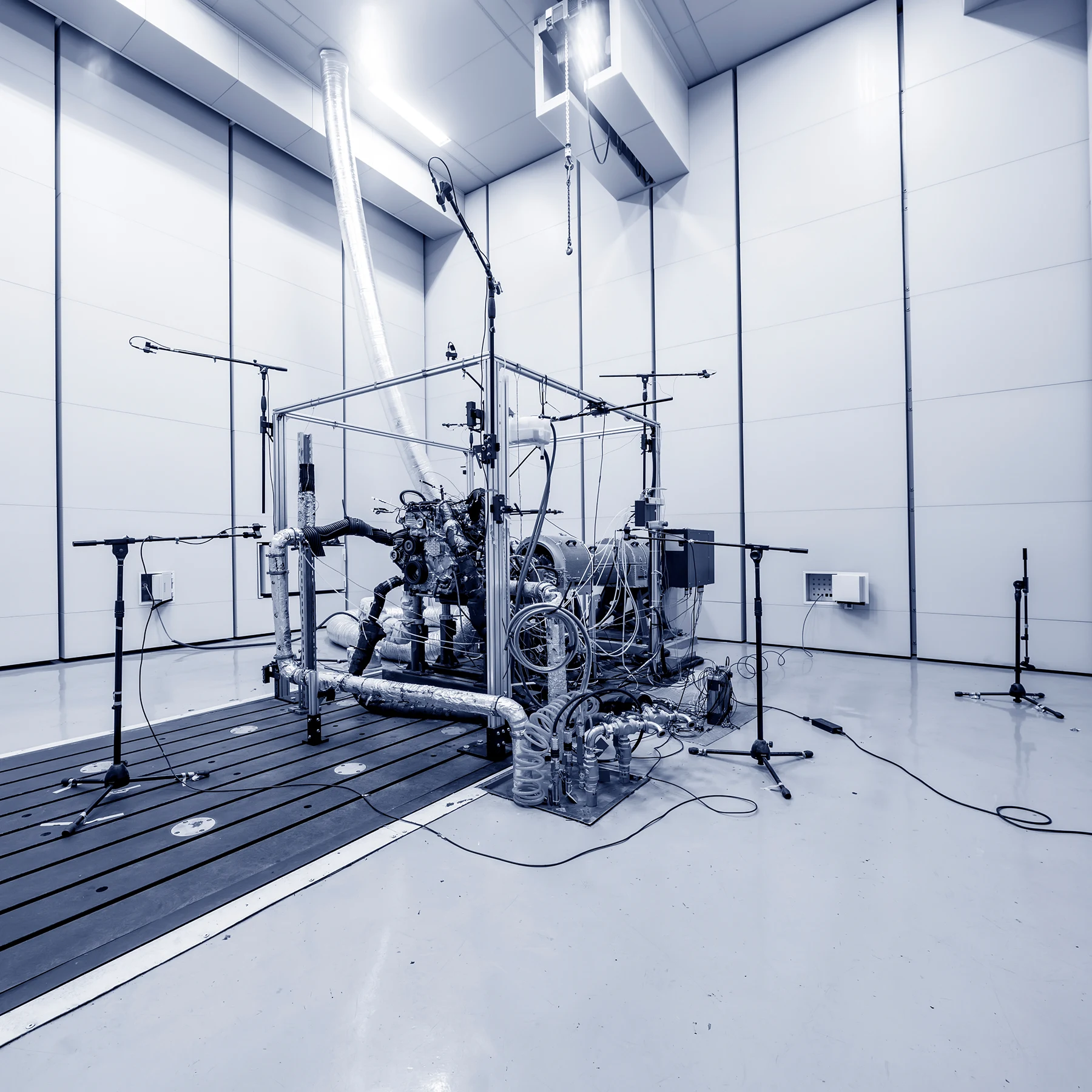
Full transmissions tested in semi-anechoic environments to evaluate overall noise, vibration, and harshness during operation.
Spin bearings at high speed under load using precision microphones to detect subtle noise signatures.
Test complete driveline assemblies for noise and vibration under load, measuring differential gear whine and driveshaft vibration.
Run engines through various RPM profiles to measure radiated noise and vibration from the block, mounts, and exhaust.
A key part of our test equipment design is the integration of data acquisition systems and sensors. Accurate, high-resolution data is the foundation of any effective test rig. We work with industry-leading data acquisition (DAQ) platforms and instrumentation to ensure you get precise measurements from every test. Depending on the project needs, we can incorporate solutions from HBM, Contec, Advantech, Dewesoft, National Instruments (NI), Texas Instruments, and other providers. Our DAQ setups range from simple microcontroller-based loggers to multi-channel, high-speed systems: – For cost-sensitive applications or initial prototypes, we can implement off-the-shelf microcontrollers like Arduino, ESP32, or Raspberry Pi to record sensor inputs and control test actions. These provide a low-cost entry point for basic data collection and automation. – For advanced testing with numerous sensors and high sampling rates, we use professional DAQ hardware (for example, NI, Contec DAQ or Dewesoft SIRIUS units) paired with powerful software for real-time analysis. This allows for features like live FFTs, automated report generation, and database integration of your test results
Crucially, we instrument each test machine with the right sensors for the job. We use precision torque transducers from Kistler (a global leader in dynamic measurement technology for force, torque, pressure, and acceleration) and HBM, high-accuracy load cells, pressure transducers, string potentiometers, LVDTs, and more. For vibration and acoustics, we integrate accelerometers and microphones from reputable brands (the same kind used in industry-standard NVH testing). All strain gauge installations on your specimen or fixture are done with care – whether half-bridge or full-bridge configurations – to measure stress and strain during testing. We and our channel partners have expertise in strain gauge application, ensuring these sensors provide stable, noise-free readings.
All the sensor data flows into a unified data acquisition system for synchronized recording. Typically, signals are conditioned and digitized through high-quality ADCs, then recorded and analyzed via software. For example, in an NVH test rig, we might log accelerometer and microphone data at high sampling rates while simultaneously capturing force or torque readings. Our systems often include user-friendly software interfaces (custom dashboards or established platforms like DewesoftX or LabVIEW) so that you can monitor tests in real time and easily review the results. By integrating robust DAQ and instrumentation into our machines, we ensure you’re not just testing blindly – you’re capturing every metric and insight needed to understand and improve your product
We pride ourselves on building test equipment that is reliable, maintainable, and made from proven industrial components. We partner with top-tier manufacturers for all critical parts of the machine. For motion control and actuation, we utilize servo motors, drives, and controllers from brands like Siemens, Mitsubishi, and SEW. These ensure precise control of load application (be it position, speed, or torque control) and long service life with global support. For pneumatic and hydraulic actuation, we incorporate cylinders, valves, and fittings from trusted names such as SMC and Festo – guaranteeing performance and easy replacement availability. Using high-quality actuators and control hardware means our test rigs can run 24/7 if needed, with minimal downtime.
While we have broad capabilities in-house, we also recognize the value of specialization. We maintain a network of channel partners and specialists to collaborate on specific aspects of a project. For example, if a test requires a custom hydraulic power unit or an advanced strain-gauge load cell bespoke to your product, we bring in our partners who are experts in those areas. This collaborative approach allows us to deliver a complete turnkey machine that leverages the best expertise in each subsystem. You, as the customer, don’t have to juggle multiple vendors – we manage the coordination behind the scenes. Our network includes experts in electronics, sensor calibration, machining/fabrication, and software, all working with us to meet the project goals.
Critically, we tailor each design to your preferences and standards. Many manufacturers have established preferences for certain component brands or software – and we embrace that. If your plant uses Allen-Bradley or Siemens PLCs exclusively, or if you want the test rig built around National Instruments hardware because your engineers are familiar with it, we will accommodate those requirements. Our engineers are fluent in multiple platforms and can integrate the components you trust. By designing around your chosen brands when needed, we make sure the delivered equipment feels like a natural extension of your existing processes.
In summary, our use of high-quality components and our partner-driven delivery model are key differentiators. They ensure that the test equipment we supply is robust, customizable, and fully supported. You get the benefit of a one-stop solution under our roof, with the knowledge and resources of many specialized teams channeled into building the best machine for your needs. We don’t claim to “do everything alone” – instead, we do everything necessary to achieve your objectives, by working in unison with our expert partners.
We pride ourselves on building test equipment that is reliable, maintainable, and made from proven industrial components. We partner with top-tier manufacturers for all critical parts of the machine. For motion control and actuation, we utilize servo motors, drives, and controllers from brands like Siemens, Mitsubishi, and SEW. These ensure precise control of load application (be it position, speed, or torque control) and long service life with global support. For pneumatic and hydraulic actuation, we incorporate cylinders, valves, and fittings from trusted names such as SMC and Festo – guaranteeing performance and easy replacement availability. Using high-quality actuators and control hardware means our test rigs can run 24/7 if needed, with minimal downtime.
While we have broad capabilities in-house, we also recognize the value of specialization. We maintain a network of channel partners and specialists to collaborate on specific aspects of a project. For example, if a test requires a custom hydraulic power unit or an advanced strain-gauge load cell bespoke to your product, we bring in our partners who are experts in those areas. This collaborative approach allows us to deliver a complete turnkey machine that leverages the best expertise in each subsystem. You, as the customer, don’t have to juggle multiple vendors – we manage the coordination behind the scenes. Our network includes experts in electronics, sensor calibration, machining/fabrication, and software, all working with us to meet the project goals.
Critically, we tailor each design to your preferences and standards. Many manufacturers have established preferences for certain component brands or software – and we embrace that. If your plant uses Allen-Bradley or Siemens PLCs exclusively, or if you want the test rig built around National Instruments hardware because your engineers are familiar with it, we will accommodate those requirements. Our engineers are fluent in multiple platforms and can integrate the components you trust. By designing around your chosen brands when needed, we make sure the delivered equipment feels like a natural extension of your existing processes.
In summary, our use of high-quality components and our partner-driven delivery model are key differentiators. They ensure that the test equipment we supply is robust, customizable, and fully supported. You get the benefit of a one-stop solution under our roof, with the knowledge and resources of many specialized teams channeled into building the best machine for your needs. We don’t claim to “do everything alone” – instead, we do everything necessary to achieve your objectives, by working in unison with our expert partners.