Why Industrial Design Matters for a Product's Development Success
Key Takeaways
- Industrial product design and development shapes how a product looks, feels, and functions for the person using it, not just how it performs on paper.
- Skipping design work early usually shows up later as rework, tooling changes, or a product nobody wants to hold.
- Ergonomics in product design and everyday usability drive repeat purchases more than raw feature counts do.
- Not every product needs the same design depth. A handheld consumer device needs more than a back-end industrial component.
- Ontario Dynamics builds industrial design into the same team handling manufacturability, so form and function get resolved together.
A product can pass every technical review and still fail with customers. It works, the specs check out, and somehow people still put it down. That gap is almost always a design problem, not a technical one.
Industrial product design and development is the discipline that closes that gap. It shapes how a product feels in someone’s hand, how obvious it is to use, and what it costs to actually build at scale. Companies that treat it as a core part of product development, not an afterthought, grow revenue 32% faster than companies that don’t (DesignRush, 2026).
This piece breaks down what industrial design actually does, where it fits into your product roadmap, and what skipping it tends to cost.
What Is Industrial Design?
Industrial design and technical development solve different problems. Design shapes form, comfort, and how a person experiences the product. The technical side shapes structure and how it gets manufactured.
They aren’t sequential. The role of industrial design in product development works best when both teams are in the room from concept, not handing a finished shape off to be built.
How Industrial Design Shapes the User Experience
Industrial design and user experience come down to three things working together.
- Comfort. How something sits in a hand, mounts on a wall, or fits a workspace.
- Usability. Whether someone can operate it without opening a manual.
- Trust. Whether the build quality tells people this product was made carefully.
Miss any one of these and the product feels unfinished, even when it technically isn’t.
How Industrial Design Contributes to Balanced Product Development
Good product design touches six areas of the development process.
- Solving real problems. Design work should start with an actual user frustration, not a feature list. That keeps the whole project grounded in something worth solving.
- Bridging aesthetics and function. A well-designed product looks intentional before anyone reads a spec sheet. Shape communicates purpose. Form follows function here in the most literal sense.
- Balancing form and function. This is a negotiation, not a handoff. What looks and feels right has to meet what can actually be built without ballooning cost.
- Brand differentiation. Visual identity and finish quality are often the reason one product gets picked off a shelf over another. Roughly 94% of first impressions are shaped by design (DesignRush, 2026). See more in our benefits of industrial design article.
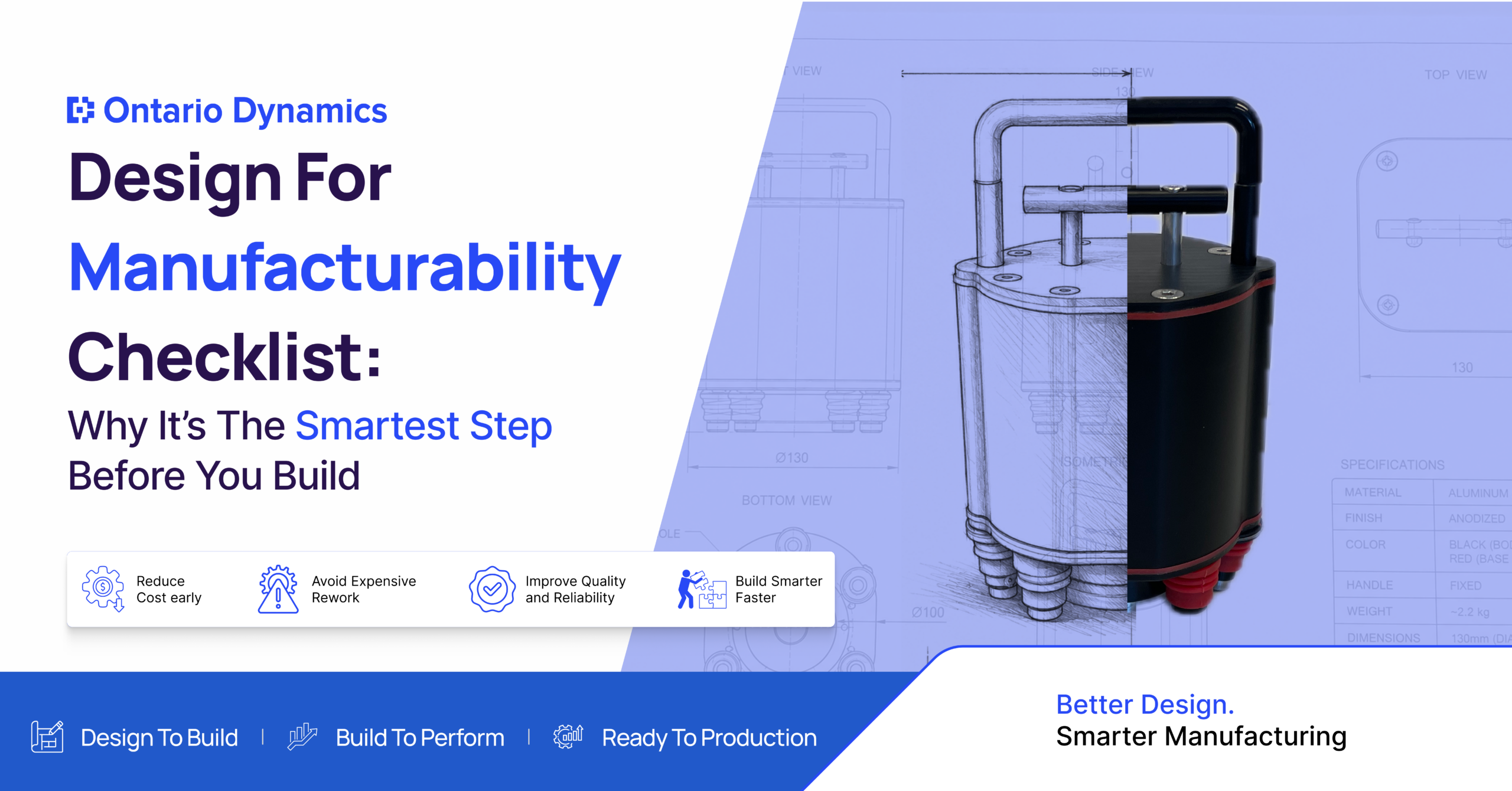
- Designing for manufacturability. Manufacturability has to be considered while the product is still on paper, not discovered after tooling is already cut. Our DFM checklist by project stage covers this in detail.
- Business results. These five points compound. They’re a large part of why design-led companies land in that faster-growth bracket mentioned earlier.
How Much Design Investment Does Your Product Need?
Design depth isn’t one-size-fits-all. The right level depends on who’s holding the product and how often.
Product Type | Design Depth Needed | Why |
Consumer or handheld product | Full design investment from concept | Comfort, look, and brand feel drive the purchase decision |
Back-end industrial component | Lighter, build-led focus | Reliability matters more than looks, but controls still need to be usable |
Connected or smart device | Full design plus interface work | Physical form and screen experience both shape how it feels to use |
Once you know your depth, the next question is sequencing. Our industrial design process article walks through that.
The Cost of Ignoring Industrial Design
Skipping design work rarely shows up as one big failure. It shows up as small, expensive ones.
A product tests poorly with real users, but only after launch. A shape that looked fine on screen needs a costly rework because manufacturability got considered too late. A product works fine, sells once, and never earns a repeat customer because nothing about it built trust.
Validating design decisions early can cut iteration cycles by 25% (UserTesting, 2025). Skip that step, and you’re paying for those cycles later, at a much higher cost.
5 Common Industrial Design Mistakes
- Treating design as decoration added at the end, instead of a strategic input from day one.
- Designing for what the internal team likes, instead of what the actual user needs.
- Ignoring manufacturability until tooling is already committed.
- Testing the digital interface but skipping user testing on the physical product itself.
- Working with separate vendors for design and build, so nothing gets resolved together.
Avoiding these is easier when design isn’t a separate vendor relationship. Ontario Dynamics’ Industrial Design Services sit inside the same team handling manufacturability, so form and function get resolved together instead of passed back and forth.
Conclusion
Industrial design isn’t decoration bolted onto a finished product. It’s the piece of product development that decides whether something is easy to use, affordable to build, and worth owning.
For startups and manufacturers across Canada building market-ready products, Ontario Dynamics brings design and manufacturability together from day one, so form, function, and cost get worked out together instead of argued over later. Design shapes the concept, prototyping proves it out, and DFM makes it buildable at cost.
Ready to see what that looks like for your product? Book a consultation with Ontario Dynamics and start the conversation.
FAQ
Yes, if people struggle to use it or it doesn't sell as expected. Working and usable aren't the same thing.
At the concept stage. Bringing it in after a prototype exists usually means expensive rework later.
No. It covers comfort, usability, manufacturability, and cost, not just appearance.
Design shapes the concept. Prototyping tests whether that concept actually holds up before a design freeze.
Often yes, especially when it's built into the same team as manufacturability instead of hired as a separate service.
Ready to Build Your Product?
Let’s turn your idea into a production-ready product engineered for success.