
Every component fails eventually , the only real question is whether it fails on your test bench or in your customer’s hands. Ontario Dynamics designs and runs fatigue testing services that answer that question before a part ever ships. From single-axis coupon work to a fully custom fatigue test rig built around your exact load case, our Toronto-based technical team combines mechanical design, FEA, and in-house instrumentation to give you data you can actually act on.
tell us your load case, and we’ll tell you how to test it.
Most parts don’t break because someone applied too much force once. They break because a moderate load got applied thousands, or millions, of times , and something in the design, the weld, the material, or the assembly couldn’t take the repetition. That’s fatigue failure, and it’s one of the hardest failure modes to catch on paper.
Fatigue testing services exist to close the gap between a model and reality. A finite element model can show you where stress concentrates. It can’t tell you, with certainty, how many cycles a bracket, weldment, or housing will survive under your actual duty cycle. That takes physical cyclic fatigue testing, applying repeated, controlled loads to a real part or material sample and measuring what actually happens.
It’s worth separating two things people often lump together. Material coupon testing characterizes a base material’s fatigue behavior , its S-N curve, its endurance limit , under clean, standardized loading. Component fatigue testing and assembly-level work is a different job entirely: it looks at how a finished part, with its geometry, welds, fasteners, and assembly tolerances, holds up under a load case that resembles what it will actually see in service. Ontario Dynamics builds test programs, and where needed, custom rigs, to answer the second question , the one that actually tells you whether your product is ready.
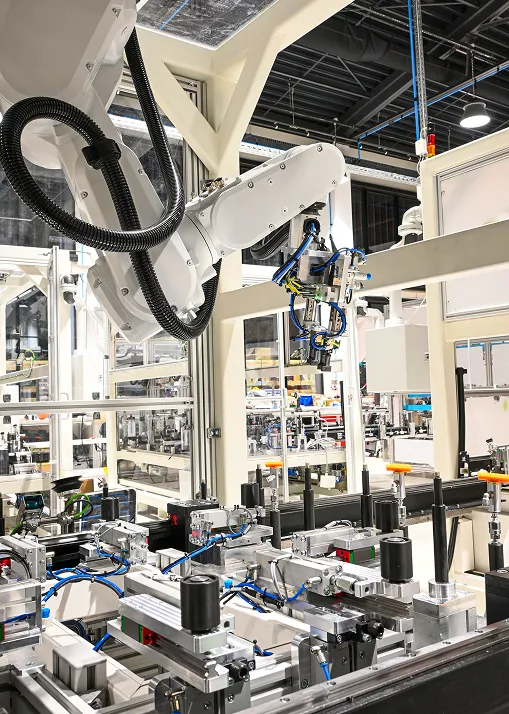
For components and materials that need to survive very high numbers of load cycles at relatively low stress amplitudes, stress-controlled high-cycle testing establishes long-term durability limits and confirms designs against endurance targets.
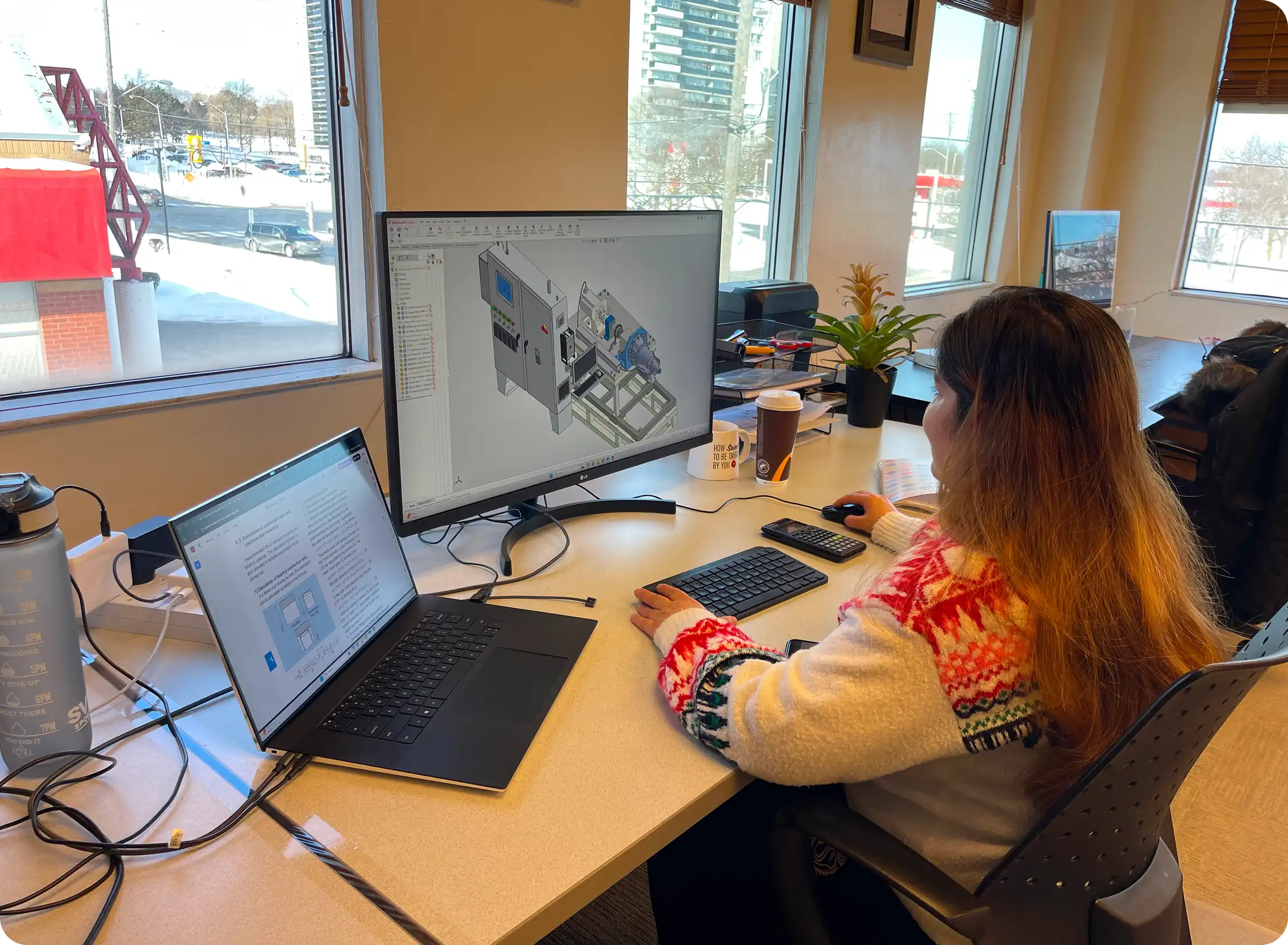
Where parts see fewer, larger-amplitude cycles that push into plastic strain territory, strain-controlled test setups capture that behavior accurately , critical for parts subject to occasional overload layered on top of normal service loading.
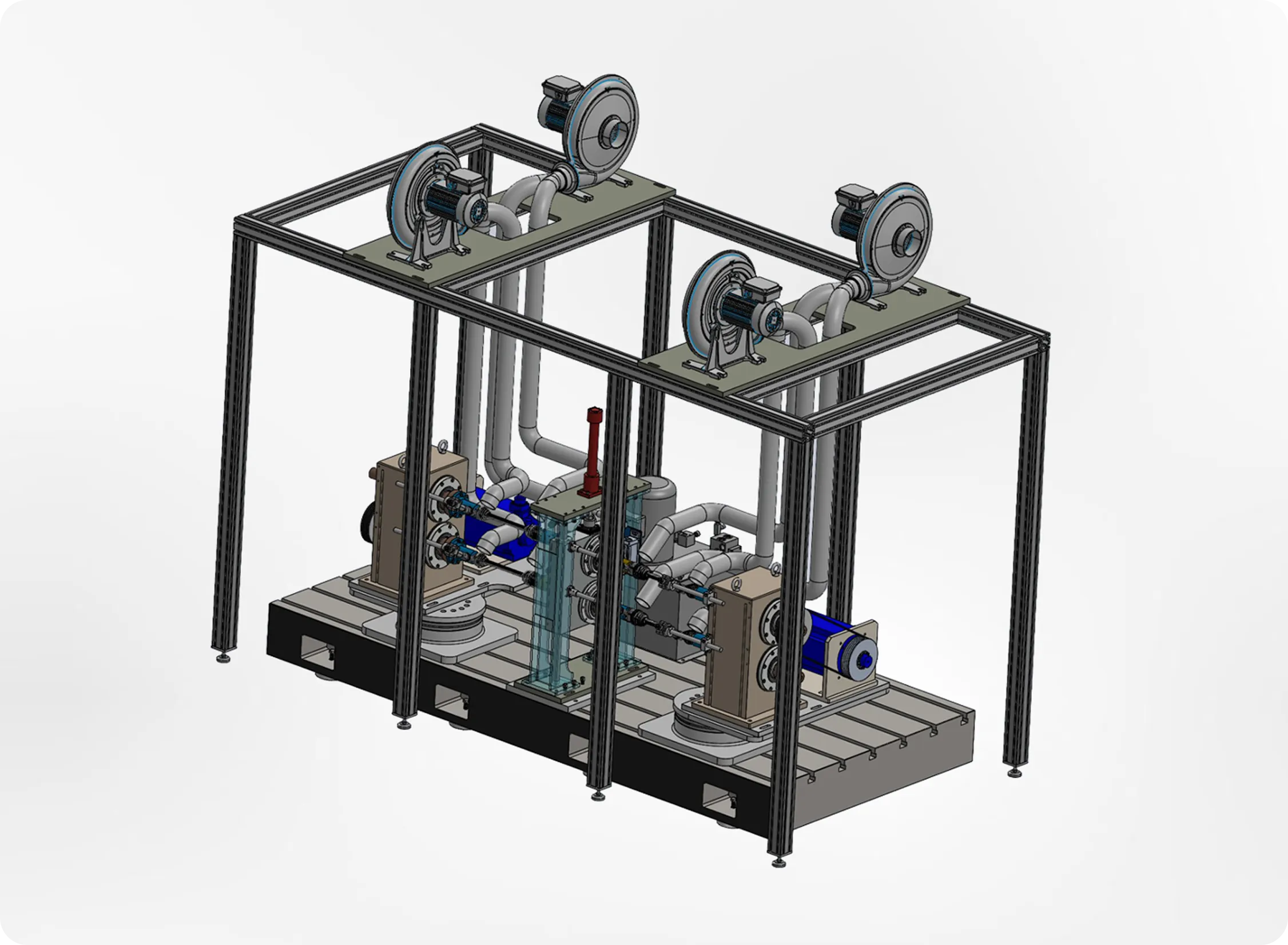
Pure push-pull loading along a single axis, run under controlled force or displacement, characterizes fatigue response for parts and coupons where axial load is the dominant real-world condition.
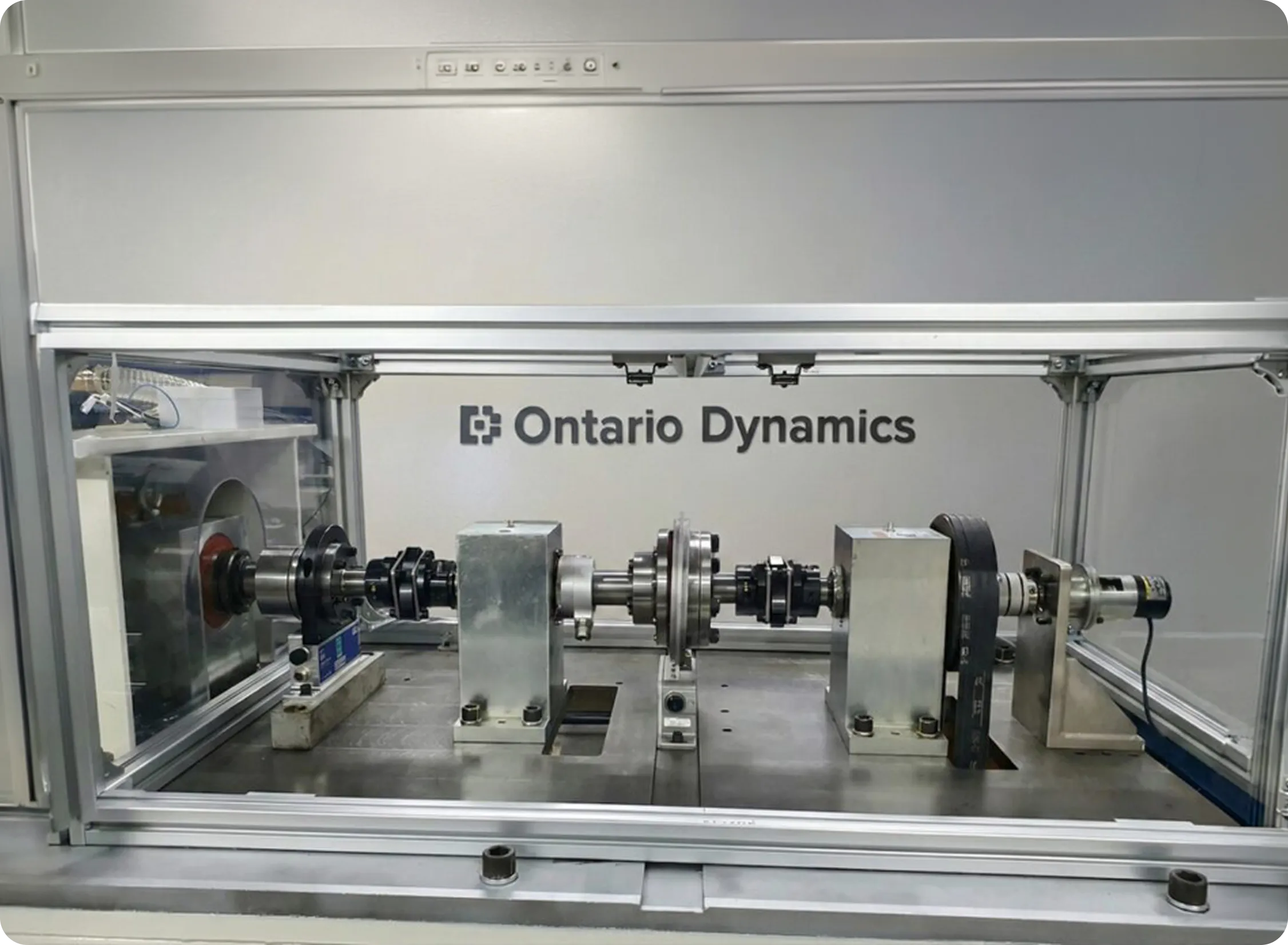
For shafts, beams, and structural members where bending , not axial load , governs the failure mode, bending test setups are matched to the part’s actual boundary conditions and loading direction.
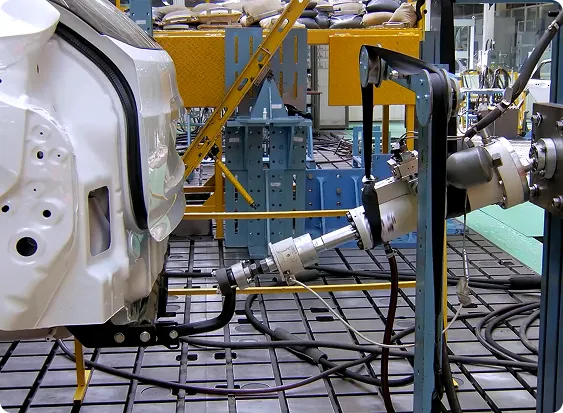
Many real parts don’t fail under one simple load type , they see torsion combined with bending or axial load at the same time. Test setups reproduce that combined, multiaxial loading rather than testing each axis alone and hoping the results add up.
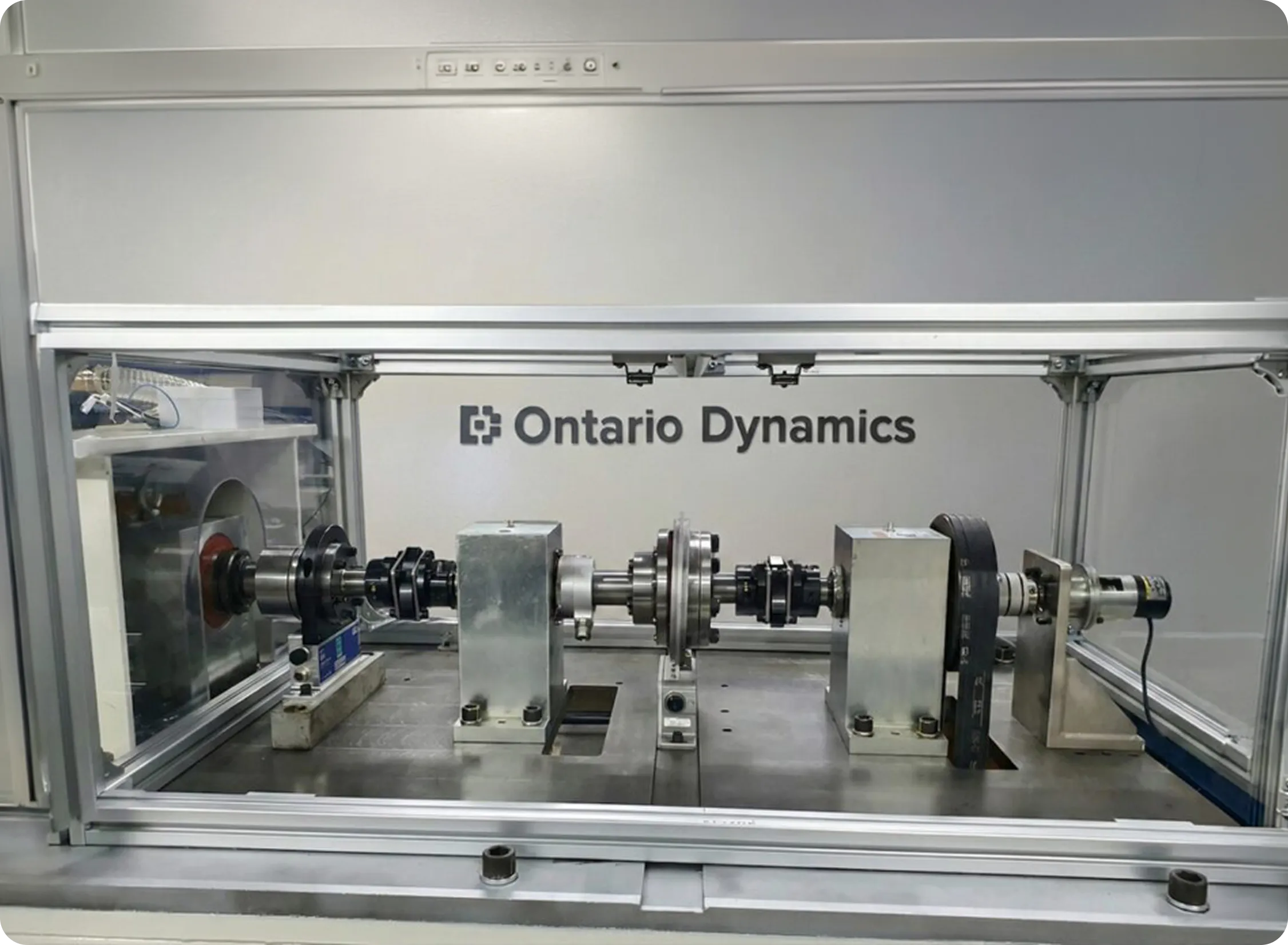
This is where Ontario Dynamics does its best work. Rather than testing a coupon that only approximates your part, setups are built around the actual component or assembly , fixtures, load paths, and boundary conditions built to reproduce how the part is mounted and loaded in the field. If your concern is whether a bracket, housing, weldment, or subassembly survives real duty-cycle abuse, this is the level of structural fatigue testing that answers it.

Off-the-shelf fatigue machines are built for standard specimens under standard load profiles. Real parts rarely cooperate. When your component needs a non-standard load path, a combined motion profile, an unusual fixture geometry, or a duty cycle that doesn’t match any canned test method, a custom fatigue rig gets designed and built around your part , not the other way around.
Test programs are structured around applicable ASTM fatigue standards, giving your results a documented, defensible methodology.
For programs requiring international standard alignment, testing can be structured to relevant ISO fatigue methodologies.
A lot of mechanical fatigue testing work doesn't start with a published standard , it starts with an OEM validation spec or a customer-supplied duty cycle. Test programs get built directly around those internal specifications, translating a customer's load case or validation document into an executable plan and, where needed, a purpose-built fixture to run it.
Every program starts with a straightforward conversation: what's the failure mode you're worried about, what's the duty cycle, what counts as pass or fail. That becomes a documented test plan before any hardware gets touched.
Parts get prepped, instrumented, and mounted correctly the first time , because a fatigue test built on a bad fixture produces data nobody can trust.
Custom fixtures are designed and FEA-checked in-house, so load enters the part the way it's supposed to, without fixture flex or unintended stress risers skewing your results.
Strain gauges, load cells, displacement sensors, accelerometers , instrumentation gets picked based on what the test actually needs to measure, not a generic checklist.
Tests run with live monitoring, so anomalies, unexpected precursors to failure, or fixture issues get caught while the test is running, not discovered afterward.
Raw signal data gets reduced into the numbers that matter , cycles to failure, stress or strain amplitude, run-out status , and delivered in a report your team can actually use.
Where a prior FEA model exists, test results get checked against it, closing the loop between prediction and reality and feeding real data back into the design.
Cyclic loads are applied through actuation systems sized to your force, frequency, and stroke requirements , whether the application calls for high-cycle, high-frequency loading or slower, higher-amplitude cycling.
Load cells, strain gauges, LVDTs, and vibration sensors capture the physical response of the part throughout the test, giving you a complete picture beyond a simple cycle count.
In-house DAQ and control systems capture, sync, and log every channel in real time, built around LabVIEW-based data and connectivity capability.
Longer fatigue programs run unattended for extended periods, so test sequences are automated through PLC and HMI control , with logging and shutdown conditions built in.
Every rig is built with proper interlocks and safety systems from the start, and fixtures are built per project rather than forced onto generic hardware , an approach that draws on Ontario Dynamics' broader capability in CAD/FEA design, sensor integration, DAQ, PLC/HMI automation, strain gauging, temperature sensing, and shaker-table testing
Suppliers require clear drawings, material specifications, tolerances, and CAD files. Ontario Dynamics helps prepare complete design packages so suppliers can quote, review, and build more efficiently.
Where the test program supports it, results are presented as S-N or strain-life (ε-N) data to characterise fatigue behaviour across load levels
Full raw sensor data is kept and delivered alongside processed results, so your team can dig deeper if a question comes up later.
Failures get documented , photographed, logged, and described , so the "how" and "where" of a failure is captured, not just the cycle count.
Where relevant, results are tied back to your FEA model, with practical recommendations on what the data means for your design.
Structural and mechanical components across the automotive supply chain get validated against OEM-level duty cycles and specifications.
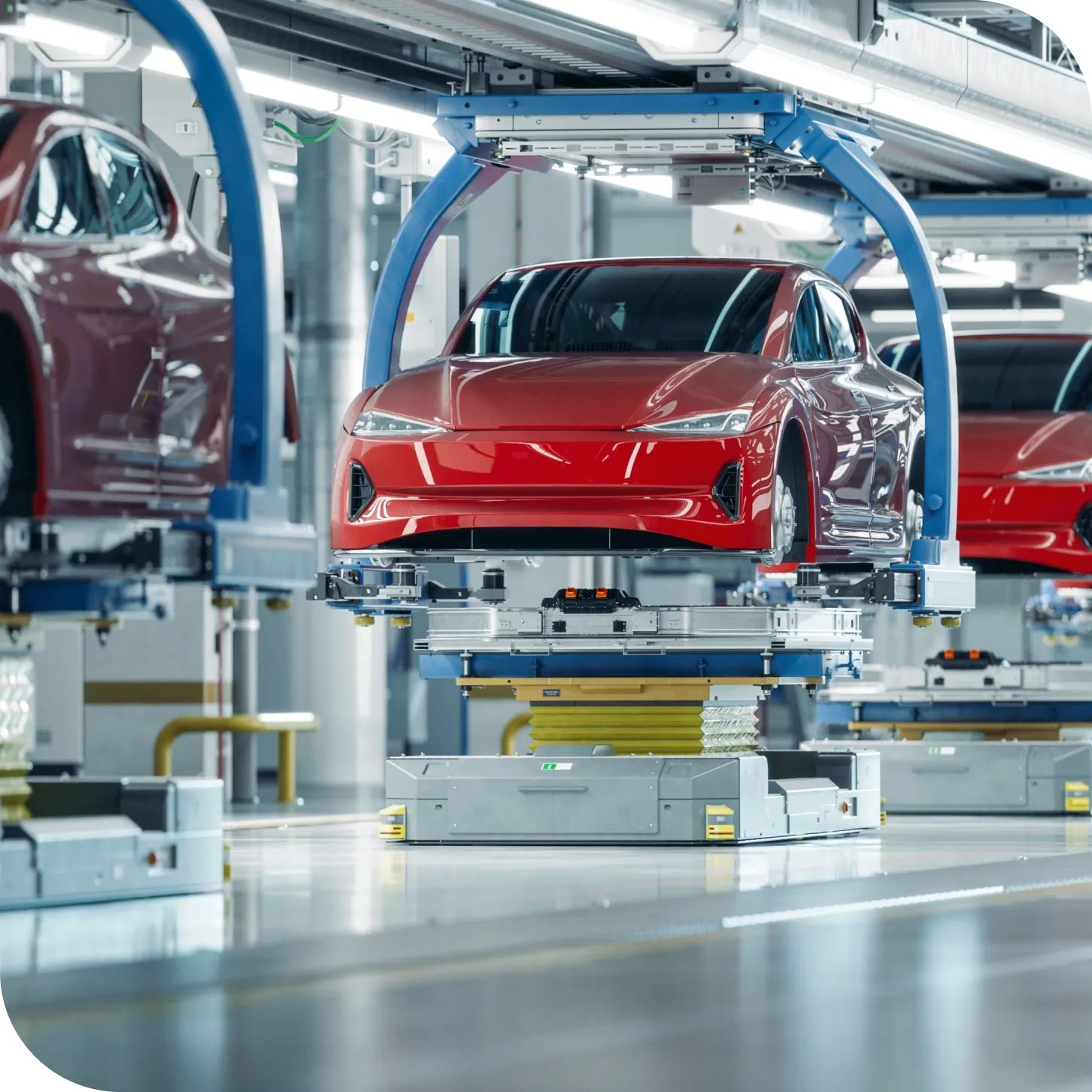
Ontario Dynamics has direct experience with transmission and EDU (electric drive unit) validation work, along with bearing noise and vibration analysis , areas that map directly onto EV and powertrain fatigue and durability needs.
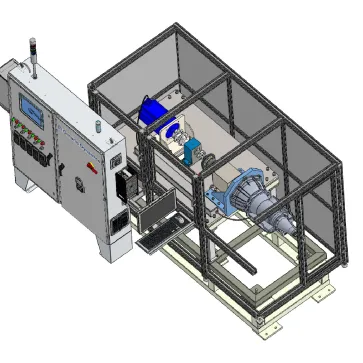
Industrial and automation hardware sees its own repeated-load patterns, and components get tested against the cyclic and dynamic loads they’ll actually face in service.
Research groups and university programs get access to the same custom test-system design and build capability used for industrial clients, for validation work that doesn’t fit a standard commercial test.
Sometimes the part, the load case, or the motion profile just doesn’t fit anything sitting in a catalog. That’s the point where a custom fatigue test rig stops being a nice-to-have and becomes the only way to get a valid result.
Fixtures and load-application hardware are designed from scratch around your part’s geometry and mounting conditions, not adapted from a generic fixture kit.
Rigs go through full mechanical design and FEA before fabrication, with motion analysis where the load case involves more than simple linear or rotational cycling.
Every custom rig gets built with its own control system, DAQ integration, and automation logic , built to run your specific test sequence reliably, cycle after cycle.
Rigs are fabricated, run through Factory Acceptance Testing and Site Acceptance Testing, and commissioned properly before they’re handed over or put into service.
A Toronto-based team with 15+ years of relevant technical experience
In-house capability across mechanical design, FEA, custom test systems, and DAQ
Custom design-build capability, not just testing on existing equipment
FAT/SAT and full commissioning on every custom rig
NDA and IP protection built into the project process from day one
A track record of real projects, not just capability statements
Tell us about your part, your load case, and your timeline, and we’ll scope a fatigue testing program or custom rig around it.
Find quick answers to the most common questions about our services, process, and support
Fatigue testing applies repeated, cyclic loads to a material, component, or assembly to determine how many cycles it can survive before failure , capturing a failure mode that single-load static testing can't predict.
Static testing applies one load, once, to find ultimate strength or yield. Fatigue testing applies a load repeatedly, often thousands or millions of times, to find how the part behaves under repeated stress well below its static strength.
A fatigue test rig is the mechanical and control system used to apply repeated cyclic loads to a specimen or component, including the actuator, fixturing, instrumentation, and control software.
Yes. When a standard fatigue testing machine can't reproduce your part's geometry, load path, or motion profile, a custom fatigue test rig gets designed and built around your specific requirements.
Capabilities include high-cycle and low-cycle fatigue testing, axial tension-compression testing, bending and rotating-bending testing, torsional and multiaxial testing, and full component fatigue testing at the assembly level.
Yes. Many programs are built directly around a customer-supplied duty cycle or an OEM validation specification rather than a generic published standard.
Automotive OEM and Tier suppliers, EV and powertrain component makers, industrial machinery and robotics companies, and university or R&D validation programs.
Deliverables typically include cycles-to-failure or run-out results, S-N or strain-life data where applicable, raw sensor data, failure documentation, and a technical report with recommendations.
Yes. Where an FEA model exists, results can be checked against it to validate the model and inform design changes.
Timelines depend on load level, target cycle count, and number of samples , high-cycle programs run longer than low-cycle programs by design. Timeline gets scoped as part of test-plan development.
Yes. NDA and IP protection are standard parts of the project process.
Ontario Dynamics is based in Toronto, Ontario, and provides fatigue testing services and custom test system design across Canada.


Services
Company