
Improve press shop productivity with custom press line automation solutions and press automation systems designed for robotic transfer, material handling, part movement, die change efficiency, and end-to-end production flow.
Press line automation brings together presses, robots, feeders, transfer systems, conveyors, controls, and safety equipment into one coordinated production line. Instead of relying on manual handling between each stage, automated systems move parts, manage timing, and keep production flowing without interruption.
For manufacturers running high-volume stamping, forming, or press operations, press shop automation helps reduce manual handling, improve cycle consistency, and create a safer production environment. A well-designed automated press handling system can connect each stage of the line so parts move with less delay and less variation.
The result is a faster, safer, and more consistent press shop operation.
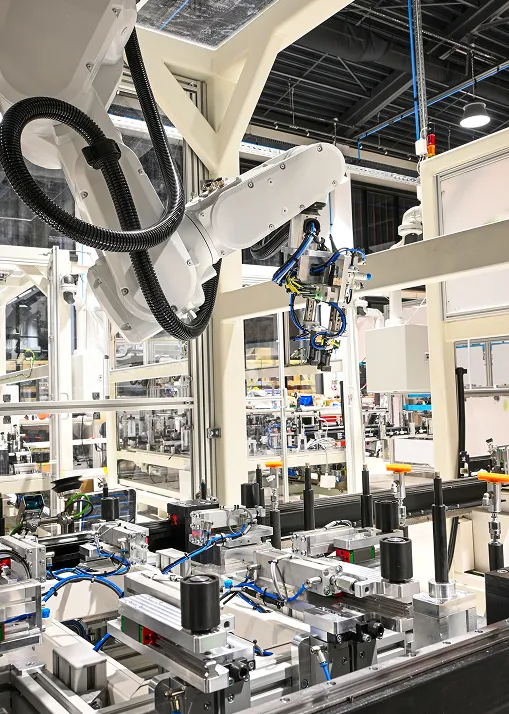
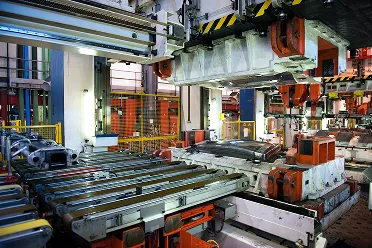
We design robotic systems that handle loading, unloading, and part transfer between presses with precision.
Synchronized transfer systems keep parts moving between multiple presses without manual intervention or delays.
Blank feeding, destacking, and material preparation systems that get parts ready before the press cycle begins.
Part unloading, stacking, inspection support, and packaging automation to complete the production flow properly.
High-cycle stamping automation built for sheet metal forming, deep draw, and high-volume production environments.
Custom equipment and automation solutions for heavy, oversized, irregular, or complex parts that standard press handling systems cannot manage.
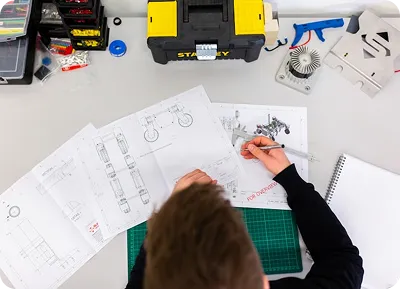
We begin by reviewing your existing press line layout, current cycle times, manual handling steps, and production bottlenecks. This shows where a custom machine or automation system can improve the line before any design work begins.
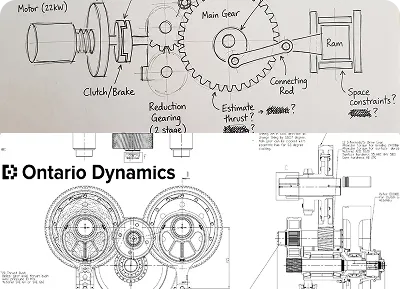
Based on the assessment, we plan robot placement, transfer methods, end-of-arm tooling, safety zones, and control logic. This stage helps our team define the right automation design approach before the equipment is built.
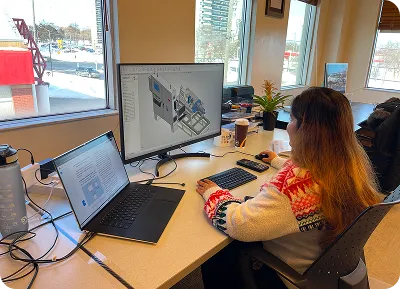
We validate robot reach, motion paths, part flow, and press synchronization through detailed machine design review and simulation. This step catches timing conflicts and integration issues before fabrication starts, saving time and cost.
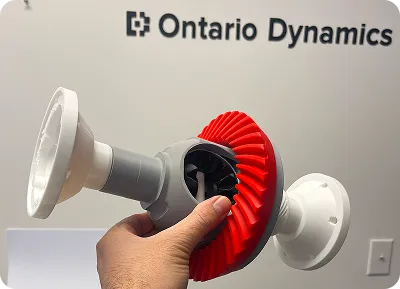
Our team builds the robotic systems, transfer equipment, conveyors, tooling, fixtures, and control panels. Every press line integration project is handled around the real layout, safety needs, and production limits of your facility.
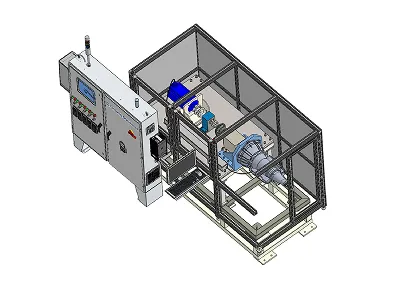
We run full production trials, fine-tune cycle times, verify press synchronization, and test all safety systems under real conditions. Nothing leaves our scope until the line performs consistently to the agreed specifications.
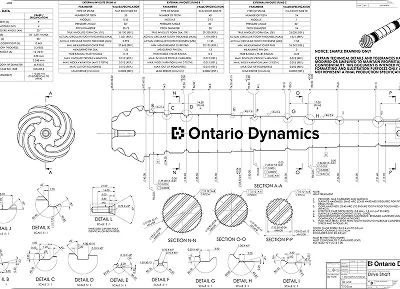
We train your operators and maintenance team on the new systems so your team can run and service the line with confidence. Post-installation support is available to resolve issues and optimize performance over time.
The right industrial press automation setup does more than increase speed. It helps manufacturers improve safety, reduce variation, protect part quality, and keep production moving with fewer handling delays.
Faster, consistent cycle times with fewer interruptions across the line.
Less physical labour, lower operator fatigue, and safer working conditions.
Better coordination between presses, robots, and transfer equipment keeps production moving.
Consistent part positioning reduces handling damage and dimensional variation.
Operators shift focus to supervision, quality checks, and maintenance tasks.
Automated die change support and SMED-aligned systems reduce changeover time significantly.
Ontario Dynamics designs press automation systems for different press types, production layouts, and part handling requirements. Whether the line uses hydraulic, mechanical, servo, straight-side, or gap frame presses, the automation must match the press cycle, part geometry, tooling setup, and safety requirements.
Many manufacturers start looking for press shop automation when manual handling, inconsistent timing, or repeated line stoppages begin affecting output. Our systems are designed to solve real press line bottlenecks, not just add equipment to the floor.
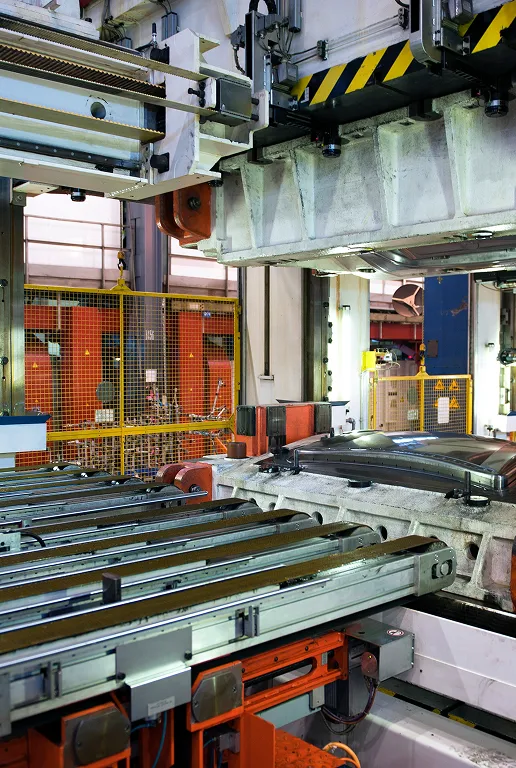
We work with automotive stamping operations that demand high cycle rates, tight tolerances, and consistent part quality. Our automotive press automation and robotic press automation systems are built to support body panels, brackets, structural parts, and other high-volume components.
We work with automotive stamping operations that demand high cycle rates, tight tolerances, and consistent part quality. From body panels to structural components, our press automation systems are built to handle the volume and precision automotive production requires.
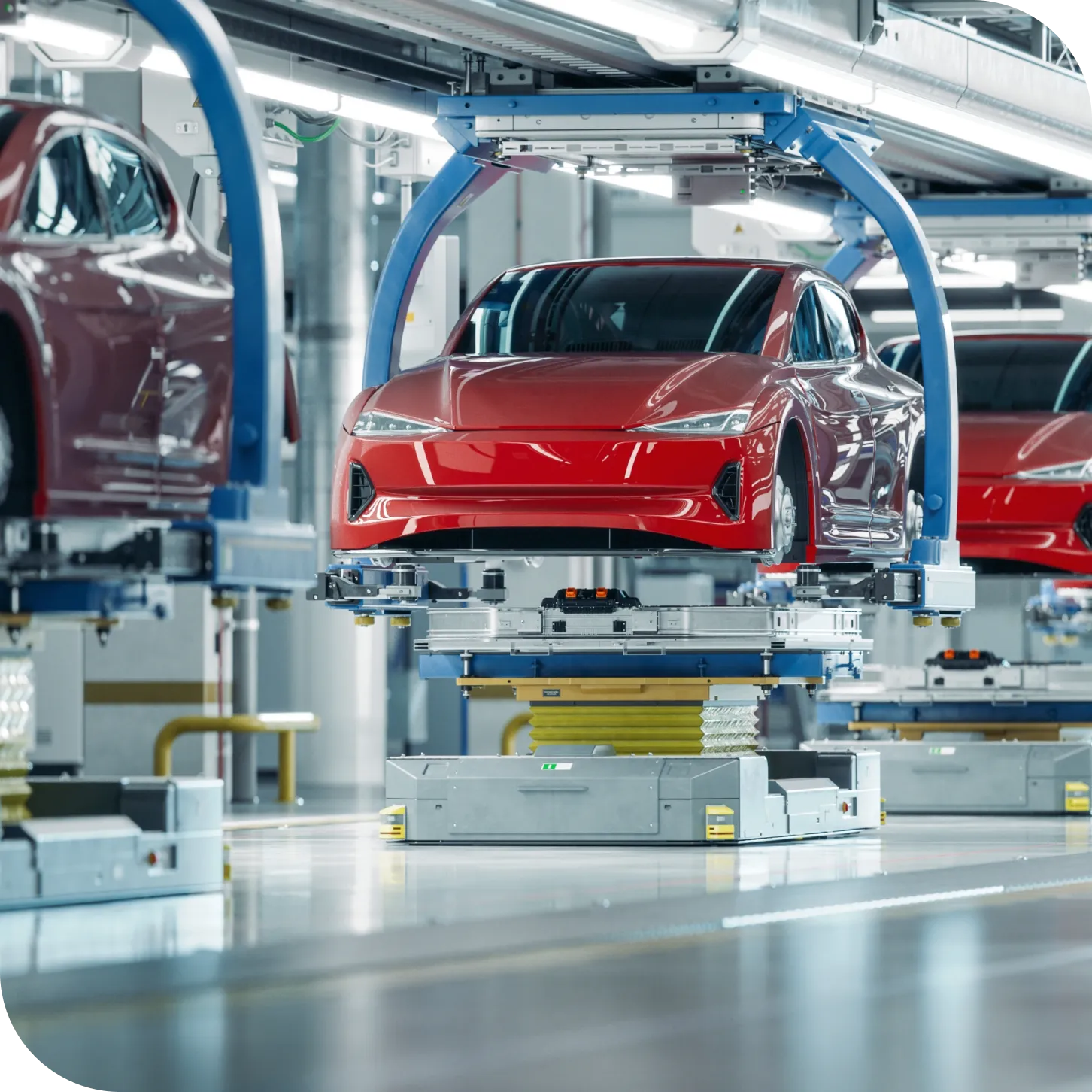
Press lines producing large structural parts for heavy machinery or agricultural equipment need systems that can handle significant weight and irregular geometry. We design custom handling and transfer systems suited for these demanding part profiles.
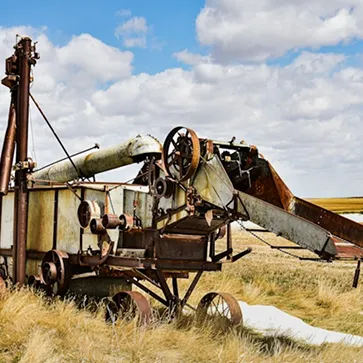
Appliance producers rely on high-speed stamping lines for sheet metal enclosures, brackets, and formed components. Our automation systems improve line throughput and part consistency while reducing the manual handling load on production staff.

Precision sheet metal parts for electrical enclosures and switchgear assemblies require careful handling and repeatable positioning. We design press automation systems that protect part quality and maintain tight cycle timing for medium-to-high volume runs.
Contract stamping shops and fabricators working across multiple part families need flexible automation that handles changeovers efficiently. We build systems that adapt to varied tooling, part sizes, and press types within a single production facility.
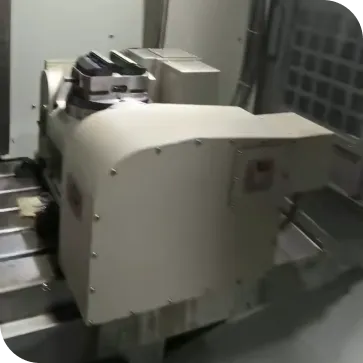
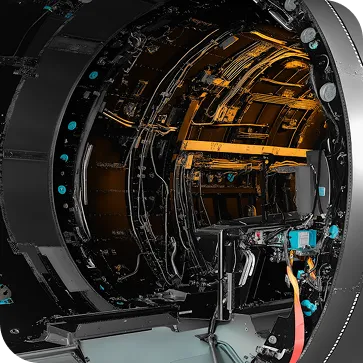
Where material traceability, handling control, and process repeatability are non-negotiable, our press automation solutions provide the consistency and documentation support that aerospace and defence manufacturing standards demand.

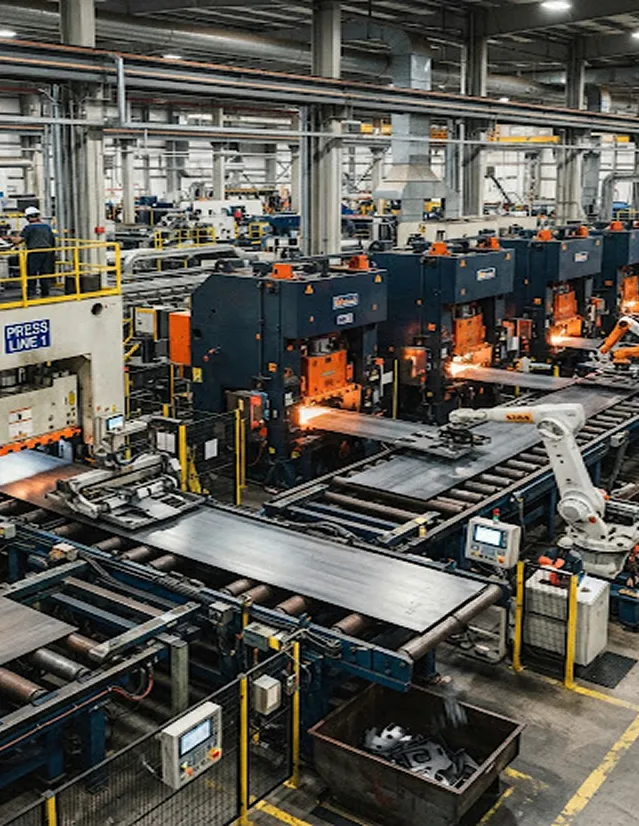
PROJECT EXAMPLE
The client faced significant throughput bottlenecks due
to manual part transfer between a 5-stage tandem
press line, resulting in high cycle times, inconsistent
yield, and ergonomic hazards for operators handling
heavy stampings.
Ontario Dynamics engineered and integrated a fully
automated 6-axis robotic transfer system, custom end-
of-arm tooling with vacuum gripping, and synchronized
PLC controls to seamlessly move parts between press
stages without interrupting continuous press operation.
Ergonomic Incidents
When you work with Ontario Dynamics, you are not getting a catalogue system fitted to your line. You are working with a team that designs special purpose machines and automation systems around your presses, part types, production targets, and facility constraints.
Ontario Dynamics combines mechanical design, CAD development, prototype support, and manufacturing-focused thinking. This helps clients move from early concepts to well-prepared, production-ready automotive systems.
We understand that press shops run on tight margins and
tighter schedules. Our job is to make your automation project
go right the first time.
Custom equipment and machine automation design — no off-the-shelf systems forced onto your process
Deep experience with equipment design, machine development, and real manufacturing environments
Robotic handling knowledge across part sizes, weights, and geometries
Press line integration expertise covering controls, timing, and safety
Practical focus on cycle time, uptime, and operator safety — not just specifications
Full-scope support from concept through commissioning and beyond
Ability to work with legacy press equipment without requiring full line replacement
If you want to reduce manual handling, increase output, and build a more reliable press shop operation, let’s talk. Our team can review your current setup and show you what a practical press line automation solution could look like for your line.
Find quick answers to the most common questions about our services, process, and support
Press line automation is the process of connecting presses, robots, feeders, transfer systems, conveyors, and controls into one coordinated production system.
Press automation removes the slowest variable from a production line — manual part handling. This improves throughput, reduces variability between shifts, lowers scrap from handling damage, and allows your press line to run with fewer interruptions throughout the day.
Press-to-press automation refers to the system that moves parts from one press to the next in a multi-press or tandem line without manual intervention.
Yes. Retrofitting an existing press line is one of the most common projects we handle. Automation can be added to legacy equipment without replacing the presses themselves.
We design automation systems for hydraulic presses, mechanical presses, servo presses, stamping presses, straight-side presses, and gap frame presses.
Robotic press automation uses industrial robots to load blanks or parts into a press, unload finished parts, and transfer them to the next station. Robots are equipped with custom end-of-arm tooling matched to the part shape and material. They operate in tight synchronization with the press cycle, allowing fast, repeatable part handling without the variability that comes with manual operation.
Stamping press automation typically starts at the front of the line with a coil feeder or blank destacker that prepares material for each press cycle. Robots or transfer systems then move the part through each forming stage. At the end of the line, finished stamped parts are unloaded, stacked, or fed into further processing.
Yes, and this is one of the most significant gains manufacturers see after automating. Manual press lines lose time to operator fatigue, mis-feeds, handling errors, and inconsistent part placement.
A typical press automation line can include robotic arms with custom end-of-arm tooling, blank feeders or destacking systems, press-to-press transfer equipment, conveyors, part inspection or vision systems, safety guarding, light curtains, and a central control system.
Press automation can refer to automating one press or one process around a press. Press line automation usually refers to a complete production flow where presses, robots, feeders, conveyors, tooling, controls, and safety systems work together.
Yes. Ontario Dynamics designs custom press automation systems as part of its equipment and machine design work. Each system is built around the customer’s press type, part geometry, cycle time, handling needs, and facility layout.
A robotic transfer system moves parts between presses or process stages using industrial robots and custom end-of-arm tooling. It improves repeatability, reduces manual handling, and supports faster production flow.


Services
Company