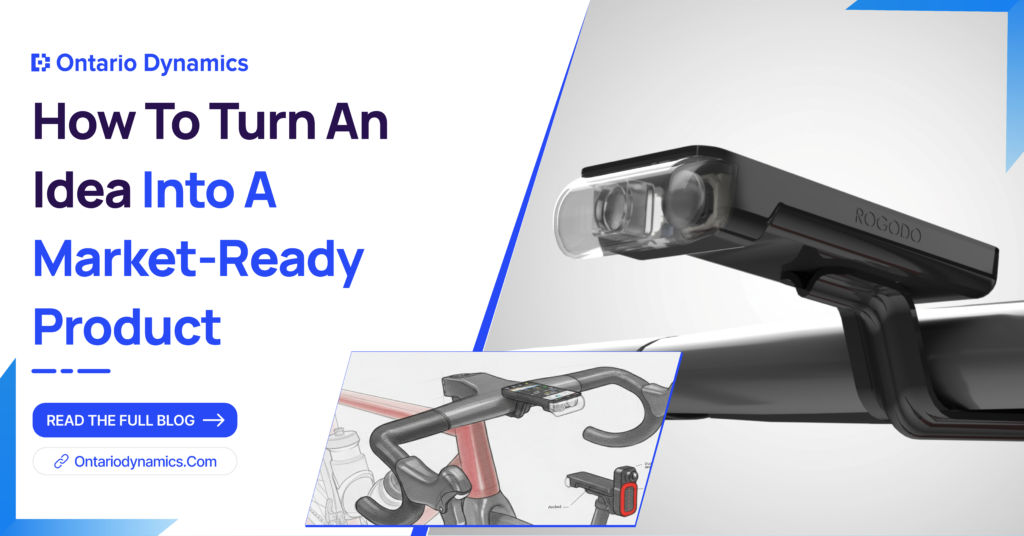
How to Turn an Idea Into a Market-Ready Product
A good idea is only the start. Many ideas sound exciting at first, but only a few become products that people actually want to buy. The difference is usually not luck. It is the process. A market-ready product needs a clear purpose, real customer demand, careful testing, a workable production plan, and a smart launch path. The U.S. Small Business Administration says market research helps you find customers and use competitive analysis to understand what makes your offer different. That step should happen early, not at the end.
Start With The Problem, Not The Product
Many people begin with features. A better starting point is the problem. Ask what pain point the product solves, who feels that problem most, and why current options fall short. If you cannot explain the problem in one or two simple lines, the idea may still be too vague. A clear problem definition also helps shape your product development process, target market, pricing direction, and launch message. Small Business Administration guidance puts market research and competitive analysis at the front of business planning for this reason.
Useful questions at this stage:
- Who is this product for
- What daily problem does it solve
- What makes people switch from their current options
- Is the problem urgent, common, or expensive
These early answers help turn a rough idea into a stronger new product development plan.
Check Whether People Actually Want It
An idea can feel strong in your head and still fail in the market. That is why customer validation matters. Talk to real buyers. Ask simple questions. Watch how they describe the problem in their own words. Look for repeated patterns. If people do not care much about the problem, the product may not have enough demand. Small Business Administration says market research helps you find customers and spot your competitive advantage. That applies directly to product idea validation.
At this stage, focus on:
- Customer interviews
- Surveys with useful questions
- Review the analysis of competing products
- Price sensitivity
- Buying habits
- Common complaints in the market
This is where product-market fit starts to take shape.
Study Competing Products Closely
Before building anything, study what already exists. Look at direct competitors and also look at substitutes. A better product does not always mean a more advanced product. Sometimes it means simpler setup, lower cost, easier cleaning, better durability, better packaging, or clearer use. Competitive research helps you avoid repeating mistakes that other products have already made.
Pay attention to:
- Customer reviews
- Weak product points
- Missing features
- Price ranges
- Delivery and packaging issues
- What buyers praise most
This helps you shape a market-ready product that fills a real gap instead of copying what is already out there.
Build A Simple Prototype First
Once the idea is clearer, move into prototype development. Do not try to perfect everything in version one. A prototype should help you test the main function, not every small detail. The United States Patent and Trademark Office (USPTO) also advises inventors to think early about protecting ideas and understanding the patent process before moving too far ahead. That can matter if your product has a unique feature, mechanism, or design.
A simple prototype helps you answer:
- Does the product work in real use
- Is the size, shape, or layout right
- Are users confused by any step
- Which parts fail first
- What changes are clearly needed
This stage is a key part of product design and development because it turns assumptions into visible proof.
Test In Real Conditions
A product that works once on a table may fail in real life. Testing should match the way the product will actually be used. That may include repeated use, drops, heat, moisture, vibration, wear, transport, or long hours of operation. The National Institute of Standards and Technology (NIST) guidance on product realization connects product design, manufacturing, and testing as part of a complete path to production. In simple terms, testing should not be treated as a last-minute task. It should shape the product before launch.
Important testing areas often include:
- function
- Safety
- Durability
- Ease of use
- Packaging strength
- Storage and Shipping performance
Good product testing saves money later because changes are usually cheaper before full production begins.
Plan For Production Early
Many products fail not because the idea is weak, but because the production plan is weak. A design that is easy to sketch may still be hard to make at scale. The National Institute of Standards and Technology (NIST) materials on product realization note that production planning and manufacturing activities are tightly linked with product design and quality control. That means build decisions should account for materials, tolerances, repeatability, suppliers, and assembly from the start.
At this point, think about:
- Material choice
- Supplier reliability
- Cost per unit
- Assembly time
- Packaging needs
- Shipping risks
- Quality checks
This is where manufacturing readiness becomes part of the conversation. A product is not market-ready if it cannot be made consistently.
Protect The Idea Where It Makes Sense
Not every product needs a patent, but every product needs a basic intellectual property review. The USPTO explains that inventors should understand patent types, application options, and the value of doing a preliminary search. Even if you do not file right away, you should know what is already protected in your category and what parts of your own product may be worth protecting.
This step may involve:
- Patent search
- Trademark review
- Naming review
- Packaging originality check
- Help from an IP professional when needed
This is less about paperwork and more about reducing risk before launch.
Build A Clear Go-To-Market Plan
A strong product still needs a strong launch. SBA says marketing and sales planning help persuade customers to buy and help prepare the business side of selling. That means launch planning should cover audience, message, channels, pricing, and fulfillment. A product should not reach the market before these basics are clear.
Your go-to-market strategy should answer:
- Who is the first target buyer
- What message will matter most
- Where will people discover the product
- How will orders be handled
- What support will customers need
- What proof will help build trust
This is where search-friendly phrases like market-ready product, product launch strategy, product development process, prototype development, product testing, and manufacturing readiness naturally support both search visibility and AI search relevance.
Improve Before You Scale
The first launch is not the end. It is the first real feedback cycle. Once sales begin, listen closely. Track returns, complaints, repeat questions, and feature requests. Watch where customers struggle. The strongest brands improve quickly after launch because they treat early buyers as a source of learning, not just revenue.
Focus on:
- Customer feedback
- Defect patterns
- Packaging issues
- Delivery complaints
- Onboarding confusion
- Feature requests
This is how a product moves from early version to a stronger long-term market fit.
Move From Idea To Action With A Better Process
Turning an idea into a market-ready product takes more than creativity. It takes research, validation, prototype development, testing, production planning, protection, and a clear launch path. Each step reduces guesswork and gives the product a better chance in the real world. If you want practical support moving from concept to launch, Ontario Dynamics is a smart place to start that conversation.
Ready to Build Your Product?
Let’s turn your idea into a production-ready product engineered for success.
FAQs
A market-ready product is a product that has been tested, planned for production, and prepared for launch with a clear target customer and sales path.
The first step is understanding the problem, the customer, and the market demand through research and validation.
It helps you test the function, usability, and weak points before spending more money on full production.
A good idea solves a real problem, gets positive feedback from target users, and stands out from current options.
Testing should begin early and continue through development so problems are found before full production.
Not always, but you should review patent and trademark basics early so you understand your options and risks.